Why there are Amazon links here: Brave Review is paid a commission for qualifying Amazon purchases made through the links below. Your price does not change, and using our links is entirely optional. How this works
Kidde Hardwired Smoke Carbon Monoxide Detector: Three-Unit Protection for a Whole Home
The Kidde hardwired smoke carbon monoxide detector is a three-pack of wired units that covers a typical apartment or single-family home in one purchase. It suits owners who want one alarm type handling both smoke and carbon monoxide, wired into the home’s existing alarm circuit with a battery backup for outages. This review covers the specifications, how the interconnect capability changes coverage, the maintenance it demands, and where the package falls short. The short answer: a solid fit for anyone replacing old hardwired alarms or wiring a new build, less so for renters who cannot touch the wiring.
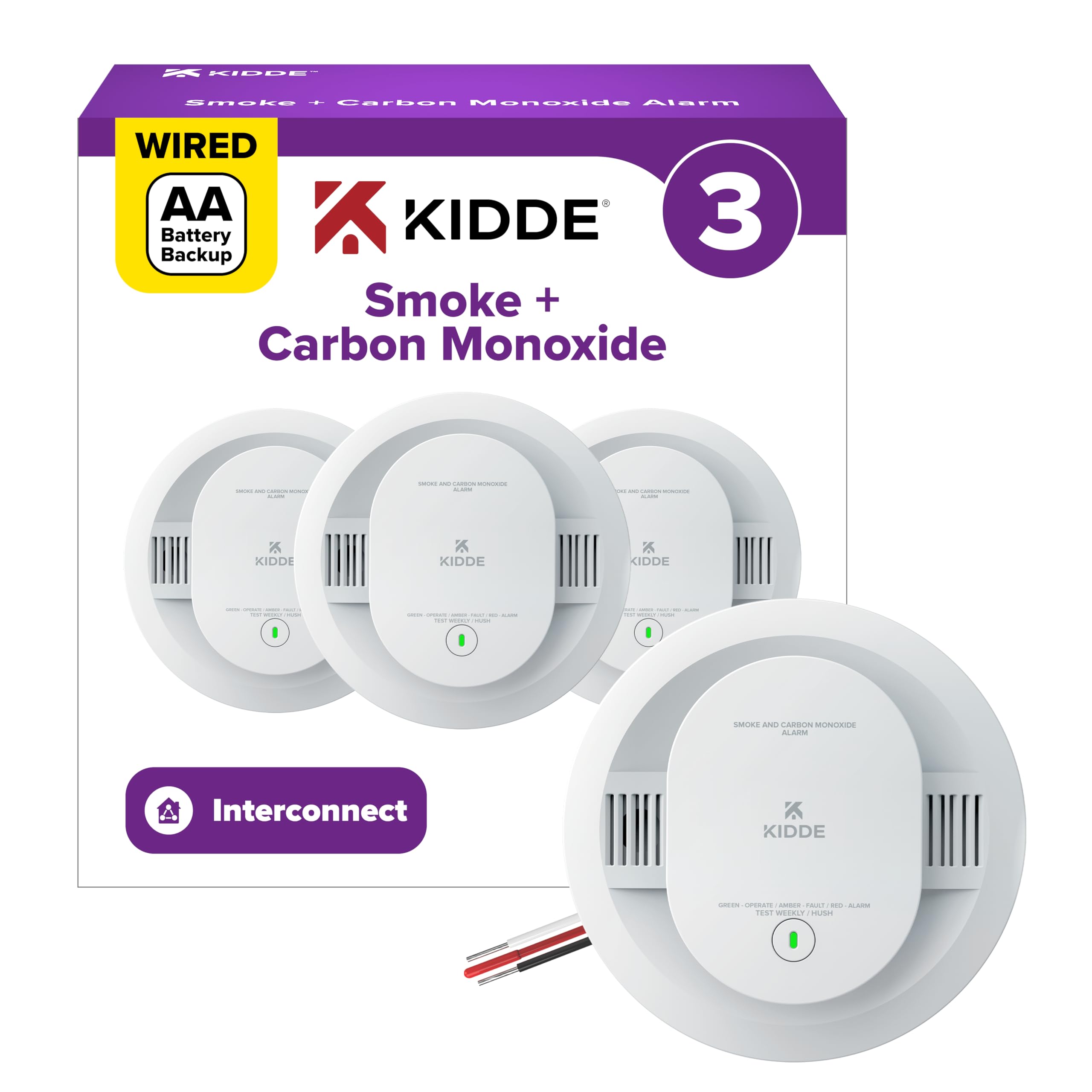
Features and Specifications
Type: Combination smoke and carbon monoxide detector
Power Source: Hardwired with AA battery backup
Interconnect: Wired interconnect capability across units
Status Indicator: LED status lights
Quantity: 3 pack
Intended Use: Homes and apartments
The name tells most of the story: these are dual-sensor alarms, meaning one unit watches for smoke and carbon monoxide at the same time. That combination matters because the two hazards need different placement logic, and a single device simplifies the shopping list.
The hardwired design draws continuous power from the home’s circuit, with AA batteries standing by when the power drops. Buyers get three units, which is the practical count for a small home — one per bedroom hallway, one near the kitchen, one on a lower level.
Build and Placement
These are ceiling- or wall-mounted units built around a wired base plate, so the install is a screwdriver job for anyone comfortable with a breaker switch. The three-pack structure is the real feature here: coverage is the whole point of buying alarms in multiples.
Placement decisions carry the most weight. Smoke rises, so ceiling mounting near sleeping areas is the standard approach, while carbon monoxide mixes more evenly through a room and benefits from placement near bedrooms rather than directly above a fuel-burning appliance.
Buyers replacing existing hardwired alarms should confirm the wiring harness matches before ordering. A mismatched connector turns a fifteen-minute swap into an electrician’s visit.
Interconnect Capability
The interconnect capability is what separates this package from three independent alarms. When one unit senses smoke or carbon monoxide, the wired link signals the others to sound as well.
That matters most at night. A single alarm in a distant hallway may not wake a sleeping household, but a network of them sounding together will. The feature only works when the units are wired to each other, so the value depends on how the home is set up.
Buyers in older homes with no interconnect wiring should plan for that limitation before purchase. The capability is present in the hardware, but it needs the right circuit to function.
Power and Battery Backup
Hardwired power means no annual battery swap for the primary supply, which is the main draw for this category. The AA battery backup keeps the alarm live through outages, and it is the one part of the system that needs routine attention.
Battery backup is not a permanent solution — the cells drain over time and need replacement on a schedule the buyer sets. A chirping alarm is usually the reminder, and that sound is easy to ignore for a week longer than it should be.
Buyers who travel or maintain rental property should note that the backup batteries are the maintenance item, not the units themselves.
LED Status Lights
The LED status lights give a quick visual read on each unit’s condition without climbing a ladder to press a test button. A glance confirms the alarm is powered and functioning.
The practical benefit is diagnostic speed. When one unit in a wired network misbehaves, the indicator helps isolate which device needs attention rather than testing all three in sequence.
Buyers should still run the manual test function on a regular schedule. The lights report status, not sensor health under every condition.
Who This Is For
This three-pack fits homeowners and apartment dwellers who already have hardwired alarm positions and want to replace aging units with combination smoke and CO detection. It also suits anyone wiring a new build who wants one product line handling both hazards across the whole property.
It is not for renters whose lease forbids electrical work, nor for buyers in homes without interconnect wiring who expect the networked alarm behavior to work anyway. Buyers wanting a single standalone alarm for one room should look at a one-pack instead of paying for three units.
Trade-off: The three-pack assumes a home with three suitable hardwired positions and matching connectors, so buyers with a different count or older wiring may end up with spare units or an electrician’s bill.
Check the current price on Amazon
FAQ
-
Does the Kidde hardwired smoke carbon monoxide detector work without wiring?
No. These units are hardwired for primary power, with AA batteries as backup only. They need a wired connection to operate and to use the interconnect feature. -
How many units does a typical home need?
The three-pack covers a small home or apartment reasonably well. Larger homes with multiple levels and bedrooms usually need more units than three. -
What does interconnect capability actually do?
When one wired unit detects smoke or carbon monoxide, the others sound too. This gives a household a louder, house-wide warning instead of a single alarm in one room. -
Do the AA batteries need regular replacement?
Yes. The backup cells drain over time and are the main maintenance item. The hardwired supply handles normal operation, but the batteries keep the alarm live during outages. -
Can these replace older hardwired alarms?
Often, but the wiring connector must match. Buyers should check the existing harness before ordering to avoid a return or an electrician visit. -
Are these suitable for apartments?
The product name lists apartments as an intended use, but renters should confirm the lease allows hardwired alarm replacement before buying. -
What do the LED status lights show?
They give a visual indication of each unit’s power and operating status, so a quick glance confirms the alarm is live without pressing the test button. -
Is one device handling both smoke and carbon monoxide reliable?
Combination units are a common, practical choice because they cover two hazards in one installation. Buyers should follow the placement guidance for both sensor types. -
How often should the units be tested?
A regular manual test schedule is the standard practice for any smoke or CO alarm. The LED lights supplement testing but do not replace it. -
Who should skip this three-pack?
Renters who cannot modify wiring, buyers with only one alarm position, and anyone in a home without interconnect wiring who expects networked alarms to work out of the box.
Bottom Line
The Kidde hardwired smoke carbon monoxide detector three-pack is the practical buy for a homeowner or apartment dweller replacing wired alarms or wiring a new property, because it covers both hazards across three positions with interconnect capability and battery backup in one purchase. The catch is the wiring requirement: buyers whose connectors or circuit do not match will need extra work or a different product. For the right home, it is a straightforward, sensible choice — check the current price on Amazon before ordering.
