Why there are Amazon links here: Brave Review is paid a commission for qualifying Amazon purchases made through the links below. Your price does not change, and using our links is entirely optional. How this works
Best Matching Colour Temperature Across Brands for Consistent Lighting
Matching colour temperature across brands is harder than it sounds: one maker’s "soft white" can look warmer than another’s, and a mixed room quickly shows it. This guide covers five products that make matching easier, whether the goal is dialling in a fixed white across a whole house, tuning light to a photo or video setup, or measuring what a bulb actually emits. Budget renovators, smart-home users and studio shooters each get a pick. The overview table below shows the differences at a glance.
Overview of the Picks
| Product | Key Spec | Best Use | Price Tier |
|---|---|---|---|
| Color Temperature Tester | 0.5–300000 LUX, high-precision meter | Verifying actual colour temperature and brightness | Mid |
| Sylvania A19 9W LED 8-Pack | 5 selectable whites, 2700–5000K, 800 lm | Filling a whole home with one repeatable white | Budget |
| Feit Electric LED 5-Color Choice | 5 whites, 2700–6500K, 800 lm | Matching daylight and cool-white fixtures | Budget |
| Philips Hue Essential Smart LED 4-Pack | 2200–6500K, dimmable, voice and app control | Precise tuning across brands via app | Premium |
| Softbox LED Photo Bulb 2-Pack | 2700–6500K, 85W, remote control, E27 | Photo and video lighting with remote white control | Mid |
1. Color Temperature Tester

Type: Handheld illuminance and colour temperature meter
Measuring Range: 0.5–300000 LUX
Intended Use: LED lighting checks and photographic measurement
Reading Type: High-precision luminance measurement
The tester is a measurement tool rather than a light source, and it is the only way to know for certain what a bulb is doing rather than what its label claims. The wide LUX range covers everything from a dim corner lamp to a bright studio softbox, and the high-precision design suits buyers comparing two brands side by side. It works best held at a fixed distance from each source so the readings stay comparable.
This pick suits photographers, AV installers and detail-focused renovators who need proof rather than guesswork. It earns its place because matching across brands starts with knowing the true numbers. The caution: a meter is only as good as the technique behind it, and casual buyers who just want a warm living room bulb may find a handheld device more precision than the job needs.
Trade-off: A measuring tool adds a step and a learning curve that most simple bulb swaps do not require.
2. Sylvania A19 9W LED 8-Pack
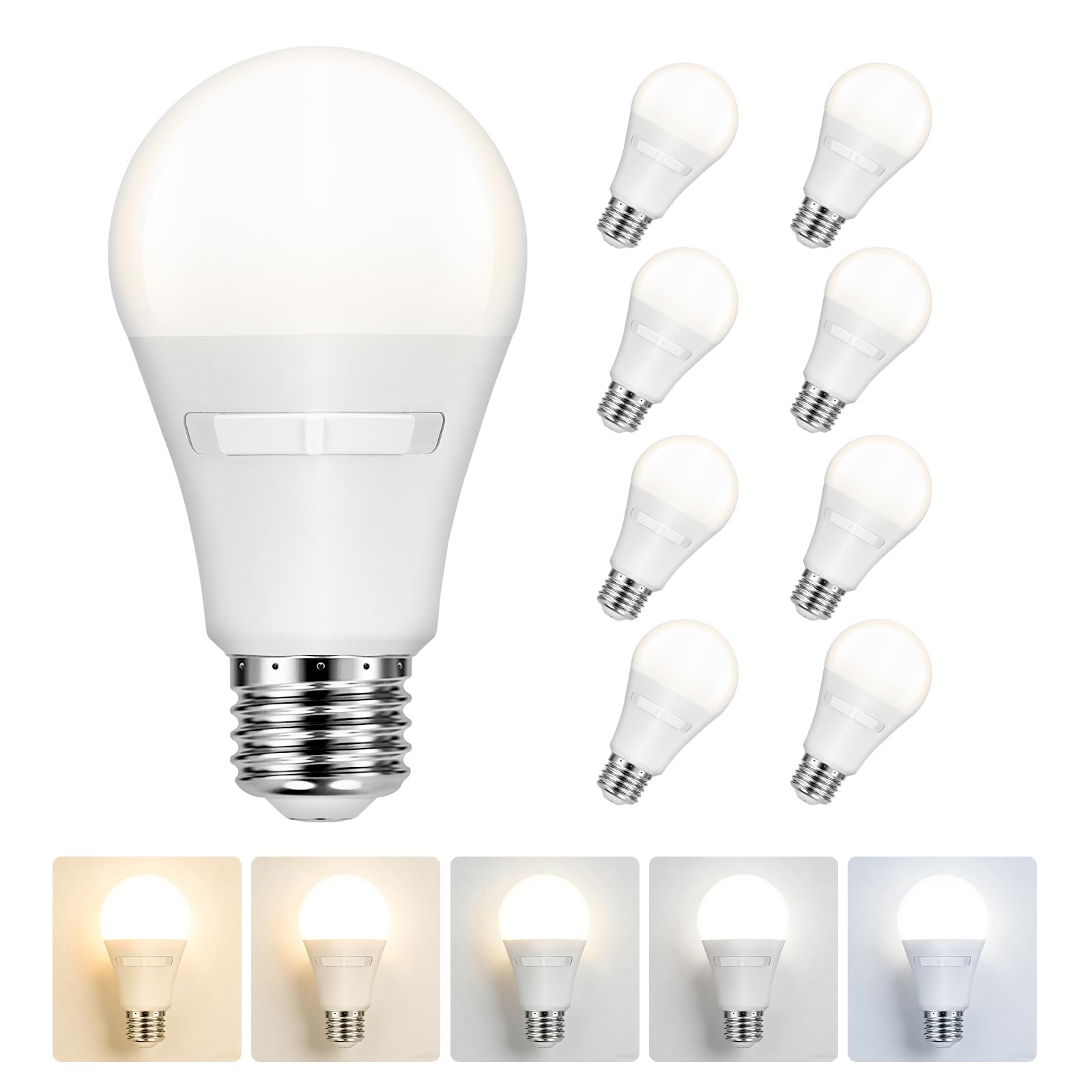
Type: A19 LED bulb, 8-pack
Wattage: 9W, 60W equivalent
Colour Temperatures: 2700K, 3000K, 3500K, 4000K, 5000K selectable
Brightness: 800 lumens
Base: Medium (E26), frosted
The Sylvania pack solves cross-brand mismatch from the other direction: instead of hunting for bulbs that agree, each bulb can be set to one of five whites so a whole house runs on the same repeatable setting. The frosted A19 shape and medium base fit standard fixtures, and 800 lumens matches a familiar 60W output. The eight-pack covers most rooms in a single purchase, which keeps the colour consistent from the start.
This pick suits homeowners swapping out a full house of mixed bulbs and renters who want one setting they can carry between rooms. It earns its place as the budget workhorse of the group. The caution: the colour is chosen at the bulb, so anyone wanting app control or scheduling will need a different route.
Trade-off: Colour selection is manual per bulb, so there is no remote or app tuning once the fixtures are up.
3. Feit Electric LED 5-Color Choice

Type: A19 LED bulb
Wattage: 60W equivalent
Brightness: 800 lumens
Colour Temperatures: 2700K, 3000K, 4000K, 5000K, 6500K selectable
Base: Medium (E26)
The Feit bulb reaches 6500K at its coolest, which is the setting that makes it useful for matching daylight and cool-white fixtures that warmer bulbs cannot touch. Five whites span soft warm through cool daylight, and the 800-lumen output keeps pace with a standard 60W bulb. The A19 shape and medium base keep it a straight swap in most lamps and ceiling fittings.
This pick suits buyers matching task lighting, garages or offices where a cooler white is wanted, and anyone who needs to bridge warm and cool fixtures in one space. It earns its place for the widest colour span in the budget tier. The caution: like the Sylvania, the colour is set at the bulb, so it offers no remote tuning, and the coolest setting can feel clinical in a living room.
Trade-off: The broad colour range is fixed per bulb, with no app or remote control for changing it later.
4. Philips Hue Essential Smart LED A19 Bulb 4-Pack
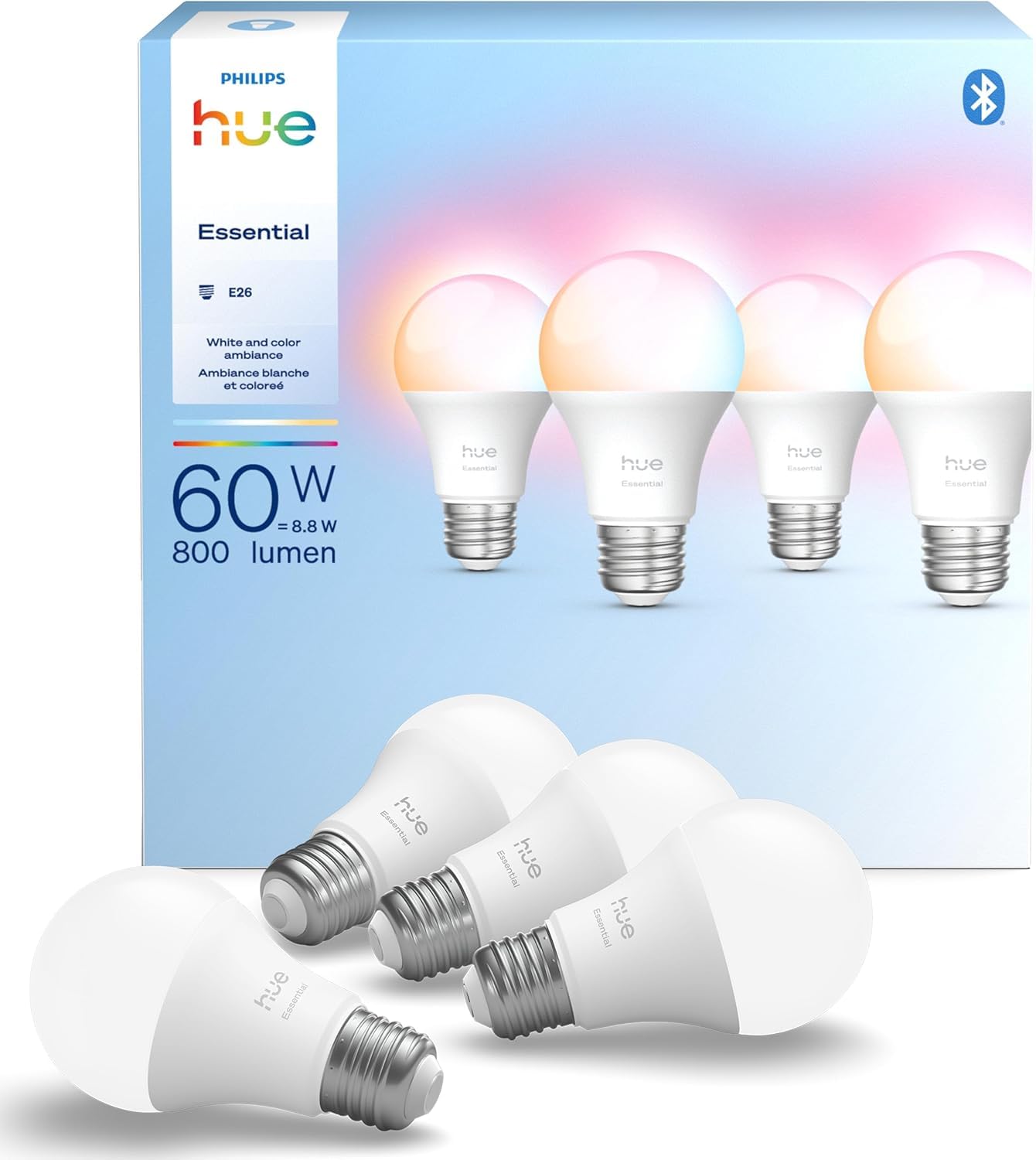
Type: Smart LED bulb, 4-pack
Wattage: 7.2W
Colour Temperature: 2200K–6500K, plus colour ambiance
Brightness: 800 lumens
Base: E26
Control: Dimmable, works with Alexa, Google Assistant, Apple Home
The Hue bulbs are the app-controlled answer to matching colour temperature across brands, because the white balance is adjusted from a phone rather than a switch on the bulb. The 2200K to 6500K range covers warm evening light through crisp daylight, and the colour ambiance adds tinted scenes on top. Dimming, voice control and the major smart-home platforms are all built in, and the 4-pack covers a room or two.
This pick suits smart-home users and anyone who wants to fine-tune whites to match other fixtures without climbing a ladder. It earns its place as the premium pick for precision and convenience. The caution: smart bulbs depend on a hub or app setup and cost far more per bulb than a manual multi-white, so a simple swap may not justify the outlay.
Trade-off: The premium price and app dependency are real costs for buyers who only need a fixed white.
5. Softbox LED Photo Bulb 2-Pack
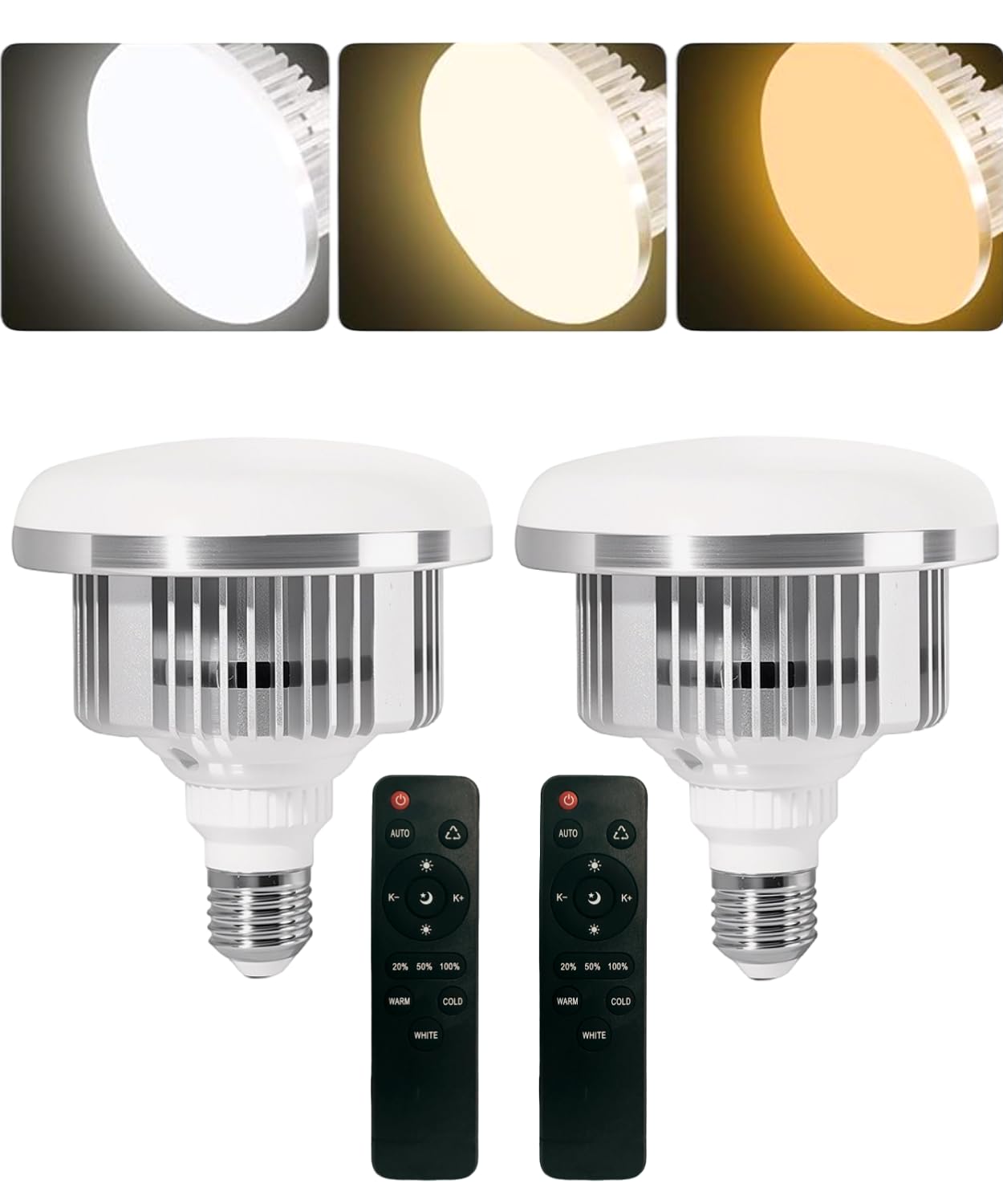
Type: Photography LED bulb, 2-pack
Wattage: 85W
Colour Temperature: 2700K–6500K
Control: Remote control, 3 colour settings
Base: E27
Intended Use: Photo and video studio lighting
The softbox bulbs are built for studio work, where matching colour temperature to a camera’s white balance matters more than in a hallway. The 2700K to 6500K span covers tungsten-warm through daylight, and the remote lets a shooter change white from across the room. The E27 base fits standard softbox and reflector fittings, and the 85W output is aimed at photography and video rather than domestic fixtures.
This pick suits photographers and video creators who need to match studio light to a scene or to other brands of continuous light. It earns its place as the specialist option in the group. The caution: these are high-output studio bulbs, so they are overkill and likely too bright for ordinary household lamps, and they depend on the remote to change settings.
Trade-off: Studio-grade output and remote control come at the cost of everyday home suitability.
Before You Buy
- Colour range: Check the Kelvin span each product offers; a wider range bridges more brands, but only if the needed white falls inside it.
- Control method: Decide between a switch on the bulb, a remote or an app, since this decides how easily whites can be matched later.
- Base and shape: Confirm E26 or E27 and the A19 form factor fit the existing fixtures before ordering a multi-pack.
- Brightness: Match lumens to the room’s existing output so a colour change does not come with a visible brightness jump.
- Measurement: A meter is the only way to confirm a bulb’s true colour temperature, which matters when matching across brands.
- Intended use: Separate domestic bulbs from studio bulbs, as the two are built for very different fittings and outputs.
Frequently Asked Questions
- Why does the same colour temperature look different across brands? Labels are nominal, and small manufacturing differences plus fixture shades can shift the apparent white, which is why measurement or app tuning helps.
- Can one bulb be set to match another brand? Yes, if it offers a selectable or app-controlled white range that includes the target Kelvin value.
- Is a colour temperature tester necessary? Not for casual swaps, but it is the reliable way to confirm what a bulb actually emits when precision matters.
- Do smart bulbs match better than manual ones? App-controlled bulbs like the Hue allow fine adjustment, which makes matching easier than a fixed set of switch positions.
- Are studio bulbs suitable for home use? Generally not, since their high output and E27 studio fittings are aimed at photography rather than domestic fixtures.
- What Kelvin range covers most needs? A span from around 2700K to 6500K covers warm room light through daylight, which is why the multi-white and smart picks lead the group.
Bottom Line
Matching colour temperature across brands comes down to control: the more precisely a bulb’s white can be set, the easier the match. For most homes, the Philips Hue Essential Smart LED 4-Pack is the top pick, because app tuning and a 2200K–6500K range make cross-brand matching straightforward. Budget buyers filling a whole house should start with the Sylvania 8-pack, while studio users get the best fit from the remote-controlled softbox bulbs.
