Why there are Amazon links here: Brave Review is paid a commission for qualifying Amazon purchases made through the links below. Your price does not change, and using our links is entirely optional. How this works
Best Mould Prevention a Tenant Can Do: 5 Rental-Safe Picks
Mould prevention a tenant can do comes down to two jobs: killing what is already growing on hard surfaces and pulling excess moisture out of the air before it settles. This guide covers five renter-friendly products that need no drilling, no wiring and no permanent changes to the property, so a deposit stays intact. It suits tenants in damp flats, renters dealing with a single musty wardrobe or bathroom, and anyone in short-term accommodation who cannot install a dehumidifier. The overview table below ranks all five by job and price tier, and the full reviews follow.
The Picks at a Glance
| Product | Key Spec | Best Use | Price Tier |
|---|---|---|---|
| MOLD ARMOR Mold Kill & Control Spray | 32 oz. spray, hard surfaces | Cleaning existing surface mould | Budget |
| MOLD ARMOR Mold Blocker | 32 oz. trigger spray, invisible barrier | Preventing regrowth after cleaning | Budget |
| DampRid Refillable Moisture Absorber | 11 oz., 6-pack, fresh scent | Small rooms and closets | Mid |
| DampRid Hi-Capacity Absorber Bucket | 2 lb. 15.5 oz., 2-pack, detection strip | Larger damp rooms | Mid |
| Vacplus Moisture Absorber | 3-pack, fragrance free | Multi-room coverage on a budget | Budget |
1. MOLD ARMOR Mold Kill & Control Spray — Best for Existing Surface Mould
Type: Liquid hard-surface spray
Size: 32 oz.
Intended use: Hard surface mould and mildew removal
Results: Visible in minutes
Also eliminates: Bacteria and viruses
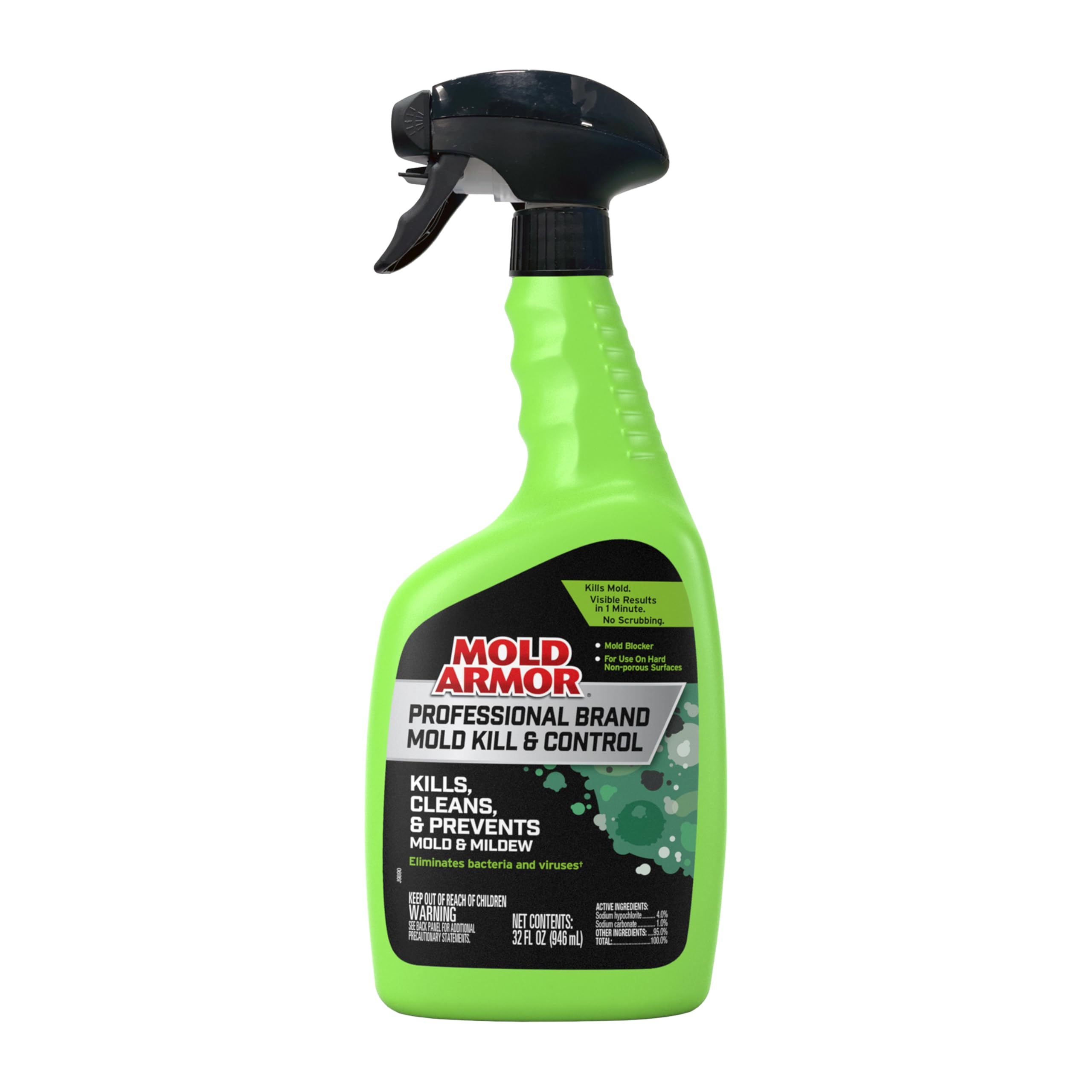
MOLD ARMOR Professional Brand Mold Kill & Control Spray is the cleanup step, not the prevention step. It is a liquid spray aimed at hard, non-porous surfaces such as tiles, grout lines, window frames, painted walls and the rubber seals around a shower, where mould takes hold first in a rental. The formula is built to show visible results within minutes of contact, which matters for a tenant who needs a bathroom looking presentable before an inspection. It also lists bacteria and virus elimination, so the same bottle doubles as a general hygiene spray for kitchen and bathroom surfaces. This is the pick for a renter who has already spotted black speckling and needs it gone without scrubbing the finish off the wall.
Trade-off: It only treats what it touches, so a tenant who sprays and stops there will see the mould return once the room gets humid again.
Check the current price on Amazon
2. MOLD ARMOR Mold Blocker — Best for Preventing Regrowth
Type: Trigger spray bottle
Size: 32 oz.
Formula: Biodegradable
Function: Creates an invisible barrier
Intended use: Indoor and outdoor surfaces

MOLD ARMOR Mold Blocker is the follow-up coat. Once a surface has been cleaned, this trigger spray lays down an invisible barrier designed to stop mould from settling back into the same spot, which is the part most tenants skip. The biodegradable formula and the trigger applicator make it practical for indoor use in a flat, and the same bottle is rated for outdoor surfaces such as a balcony wall, a shed or garden furniture that the tenant is responsible for. It suits a renter who has already dealt with a recurring patch on a bathroom ceiling or a bedroom windowsill and wants to break the cycle rather than repeat the cleaning every month.
Trade-off: A barrier spray is only as good as the surface prep underneath it, so spraying over old mould or grime wastes the bottle and the effort.
Check the current price on Amazon
3. DampRid Refillable Moisture Absorber — Best for Closets and Small Rooms
Type: Refillable moisture absorber
Size: 11 oz., 6-pack
Scent: Fresh
Absorbing power: 10% more absorbing power*
Function: Eliminates musty odors

DampRid Refillable Moisture Absorber pulls moisture out of still air, which is exactly the condition that grows mould on clothes, shoes and the back of a wardrobe. The six-pack spreads coverage across several small spaces at once — a closet, a cupboard under the sink, a shoe rack, a linen basket — and the refillable design means the housing gets reused rather than thrown out. The fresh scent is there to counter the musty smell that signals trapped damp, and the stated 10% more absorbing power is a modest step up over the standard tub. It suits a tenant in a flat with limited airflow and no window in the wardrobe, where a powered dehumidifier is impractical or forbidden.
Trade-off: These units work slowly and passively, so a genuinely wet room will overwhelm them long before they make a visible difference.
Check the current price on Amazon
4. DampRid Hi-Capacity Absorber Bucket — Best for Larger Damp Rooms
Type: Hi-capacity absorber bucket
Size: 2 lb. 15.5 oz., 2-pack
Scent: Fragrance free
Feature: Detection strip
Intended use: Larger rooms with excess moisture

DampRid Hi-Capacity Absorber Bucket scales the same idea up to a bucket format for rooms where the air stays heavy — a basement bedroom, a north-facing living room, a utility corner where laundry dries. The larger granule load lasts longer between changes than a small tub, and the detection strip takes the guesswork out of knowing when the unit is spent, which is useful for a tenant who does not want to keep checking. The fragrance-free formula is the right call for a bedroom or a room shared with someone sensitive to scent. The two-pack means one bucket can be working while the other waits.
Trade-off: A bucket this size needs floor space and is easy to knock over, so it is a poor fit for a cramped hallway or a home with toddlers and pets.
Check the current price on Amazon
5. Vacplus Moisture Absorber — Best Multi-Room Value
Type: Moisture absorber bucket
Pack size: 3-pack
Absorption: Strong
Scent: Fragrance free
Intended use: Closet, bathroom, kitchen, study

Vacplus Moisture Absorber is the spread-it-around option: three fragrance-free buckets in one pack, aimed at the four rooms where damp shows up first — closet, bathroom, kitchen and study. Strong absorption is the selling point, and the unscented formula means the units can sit in a bedroom or a home office without announcing themselves. For a tenant moving into a new flat and wanting to cover several rooms at once without spending much, this is the simplest way to get a baseline of moisture control down on day one. It also works as a top-up buy alongside a larger bucket in the worst room.
Trade-off: A three-pack of budget buckets trades capacity per unit for coverage, so each one fills faster than a single high-capacity model.
Check the current price on Amazon
Before You Buy
- Surface type: Kill and barrier sprays are for hard, non-porous surfaces. Porous materials such as carpet, plasterboard and fabric need a different approach and often a landlord conversation.
- Room size: Small refillable tubs suit closets and cupboards; bucket formats suit bedrooms, basements and utility areas.
- Scent sensitivity: Fragrance-free buckets are the safer choice for bedrooms and shared spaces; scented options are better for a wardrobe or a hallway.
- Powered vs passive: None of these products need a socket, which is why they work in rentals — but passive absorbers are slower than a plug-in dehumidifier.
- Ongoing cost: Refillable housings and multi-packs reduce the cost per room over a tenancy, while single tubs cost more per unit of moisture pulled.
- Storage: Buckets must sit upright and out of foot traffic; a knocked-over bucket is a mess on a landlord’s floor.
- Sequence: Clean first, then barrier-spray, then absorb. Doing these in the wrong order wastes product.
Frequently Asked Questions
- What is the most effective mould prevention a tenant can do? Keep hard surfaces clean and treated with a barrier spray, and keep moisture down with absorbers in the rooms that stay humid. Cleaning alone does not stop regrowth.
- Can a tenant use these products without landlord permission? Yes. Sprays and passive absorbers are temporary, reversible and need no drilling, wiring or permanent fixings, so they fall outside most tenancy alteration rules.
- Do moisture absorbers actually stop mould? They lower humidity in enclosed spaces, which removes the condition mould needs. They are slow, so they work best as a constant background measure rather than an emergency fix.
- Should a tenant use scented or fragrance-free absorbers? Fragrance-free is safer in bedrooms and small rooms where scent builds up. Scented versions are fine for closets and hallways.
- What should a tenant do if mould keeps coming back after treatment? Recurring mould usually points to a leak, a ventilation problem or rising damp, which is a repair issue for the landlord rather than something a spray can solve.
- How often do absorbers need changing? It depends on the room’s humidity. A detection strip or a visual check of the granule level tells the tenant when a unit has done its job.
Bottom Line
The fastest route for most renters is a two-step: treat what is already there with MOLD ARMOR Mold Kill & Control Spray, then lock the surface down with the barrier spray and keep the air dry with absorbers. If only one purchase is possible, start with the kill spray — visible mould is the problem a landlord will notice first.