Why there are Amazon links here: Brave Review is paid a commission for qualifying Amazon purchases made through the links below. Your price does not change, and using our links is entirely optional. How this works
Best Occupancy Simulation While Away: 5 TV Light Simulators That Fake a Lived-In Home
Occupancy simulation while away means making an empty house look occupied, and a TV light simulator is the simplest way to do it: a small device throws flickering, screen-like light against a wall so a passing stranger sees the blue glow of a television through the window. This roundup covers five plug-in simulators that range from a bare-bones dusk-to-dawn unit to a motion-triggered model with outdoor mounting. It suits vacation-home owners, frequent travelers, and anyone leaving a property dark for weeks at a time. The overview table below puts all five side by side so a pick can be made in under a minute.
Overview of the Picks
| Product | Key Spec | Best Use | Price Tier |
|---|---|---|---|
| The Ultimate TV Simulator Light | Auto-on at dusk, timer, adjustable LED head | Set-and-forget indoor deterrent | Budget |
| SABRE HS-FTV-7 TV Light Simulator | Night sensor, always-on or timed | Vacation homes wanting simple operation | Budget |
| Advanced Home Security TV Simulator | Motion-activated plus timer modes | Mixed schedules and energy savings | Mid-range |
| Smart Security Light Simulator | 4 modes, motion sensor, indoor/outdoor | Porches and patios as well as living rooms | Mid-range |
| FTV-10 Charcoal TV Simulator | Charcoal housing, burglar-deterrent light | Buyers who want a proven form factor | Premium |
1. The Ultimate TV Simulator Light for Home Security

Type: LED TV light simulator
Activation: Auto-on at dusk
Timer: Built-in
Head: Adjustable LED head
Intended use: Indoor burglar deterrent and lived-in look
The Ultimate TV Simulator Light for Home Security is built around a dusk sensor, so it starts throwing screen light as the room darkens and stops when daylight returns. The adjustable LED head is the differentiator here: it can be angled toward a wall, a curtain, or a ceiling so the glow lands where a real television would cast it. The built-in timer adds variation so the light does not run on the same schedule every night. It is a plug-in indoor unit, sized for a living room, den, or bedroom window.
This pick earns its place for the buyer who wants to install once and forget it — no app, no daily interaction. The adjustable head makes it more adaptable to odd room layouts than a fixed-head simulator. The caution is that a dusk sensor reacts to ambient light, so a bright porch lamp or a streetlight hitting the sensor can delay activation.
Trade-off: The dusk sensor can be fooled by nearby outdoor lighting, so placement near a bright fixture may shorten the nightly run.
Check the current price on Amazon
2. SABRE HS-FTV-7 Home Security TV Light Simulator

Type: TV light simulator
Activation: Night sensor
Operation: Always-on or timed
Efficiency: Energy-efficient LED
Intended use: Vacation homes
The SABRE HS-FTV-7 is the simplest unit in the group: a night sensor triggers it, and the owner chooses between always-on and timed operation with a switch. It simulates a real HDTV glow rather than a generic lamp, which matters because a flat blue-white screen cast reads as television to anyone glancing at a window. The always-on option suits a property where the owner wants continuous light regardless of schedule. The timed option saves energy on nights when the house should look dark.
This is the pick for a vacation home that sits empty for long stretches and needs zero supervision. Its controls are physical, so there is nothing to pair or configure. The trade-off is that a fixed schedule with no motion component is the easiest pattern for a repeat observer to notice.
Trade-off: With no motion trigger, the light follows the same routine nightly, which is less convincing than a randomized or activity-based pattern.
Check the current price on Amazon
3. Advanced Home Security TV Simulator
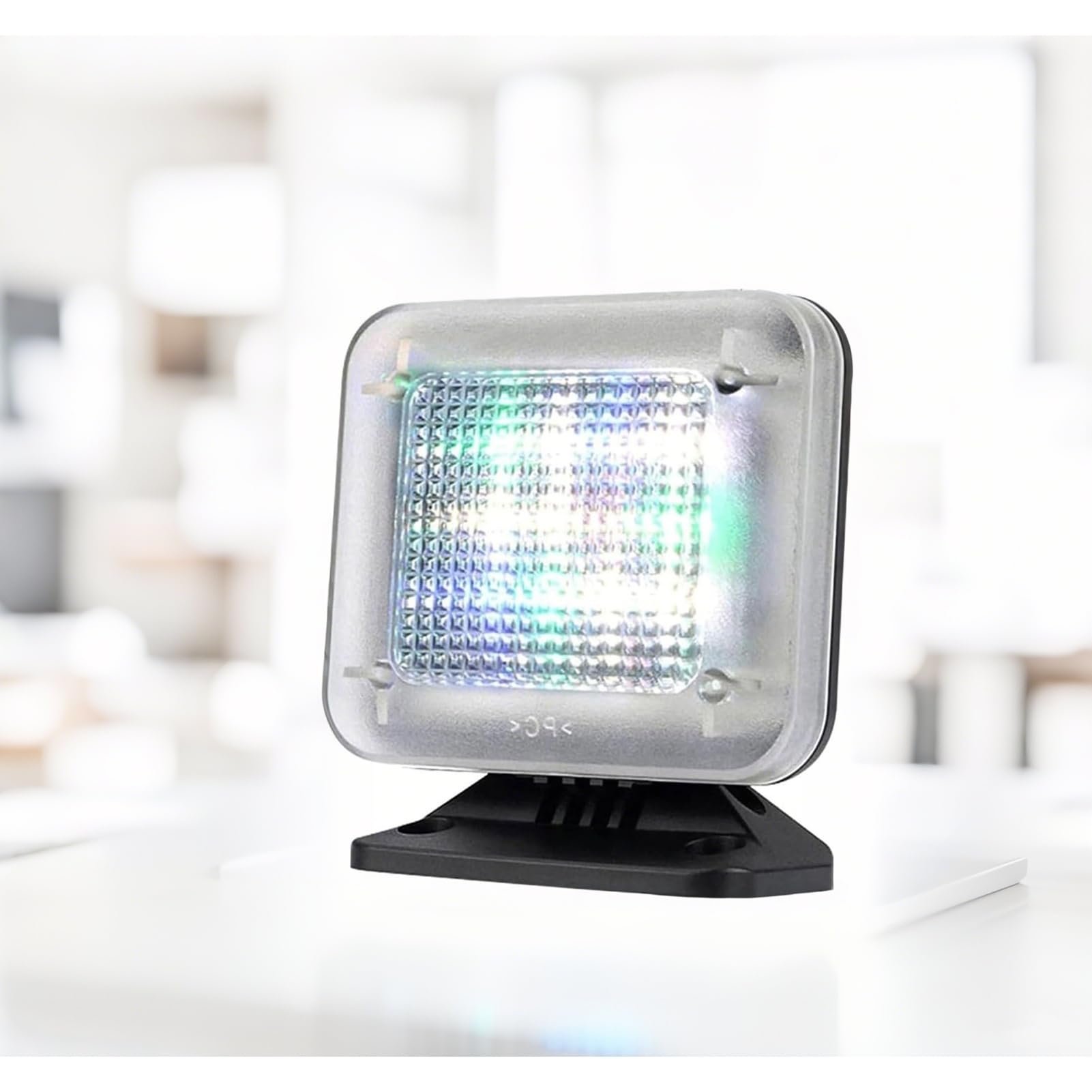
Type: TV light simulator
Modes: Motion-activated and timer
Light source: Energy-saving LED
Intended use: Burglar deterrent for an unoccupied house
The Advanced Home Security TV Simulator adds a motion trigger on top of a timer, which is the combination most occupancy guides recommend. In timer mode it runs a set schedule; in motion mode it responds to activity nearby, so the screen light comes on when something moves rather than on a predictable clock. The LED light source keeps running costs low for a device that may be on for hours each night. It is an indoor plug-in unit aimed at protecting a house and its valuables while the owner is away.
This pick suits the buyer who wants the light to react rather than merely repeat. The dual-mode design covers both a long absence and a weekend trip without changing hardware. The caution is that motion sensitivity in a room with pets or a swaying curtain can trigger false activations.
Trade-off: Motion mode can fire on pets, curtains, or HVAC drafts, so the sensor needs a clear line of sight to the target area.
Check the current price on Amazon
4. Smart Security Light Simulator with Motion Sensor
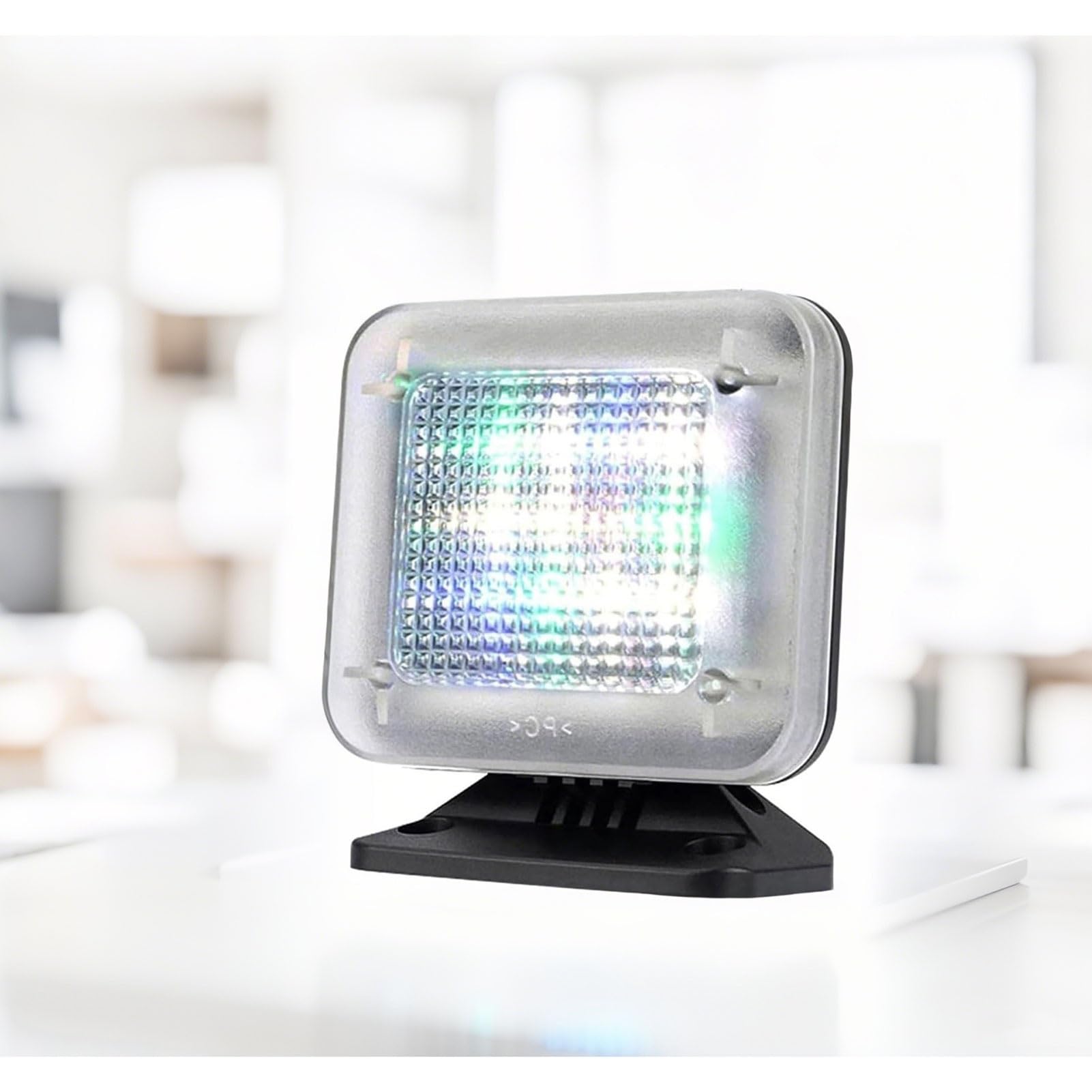
Type: Light simulator with TV effect
Modes: Four modes plus timer
Sensor: Motion
Placement: Indoor and outdoor
Intended use: Vacation home protection
The Smart Security Light Simulator is the only pick rated for both indoor and outdoor placement, which widens its use well beyond a living-room window. Four modes and a timer give the owner room to vary the pattern, and the automatic TV light effect handles the screen-glow illusion without manual input. The motion sensor supports a reactive mode for driveways, patios, and side entries. It is aimed at vacation homes that need coverage at more than one point of the property.
This earns its place for a buyer with a porch, garage, or patio that needs the same lived-in treatment as the front room. The multi-mode design also helps break up repetition. The trade-off is that outdoor mounting exposes the unit to weather and to more sensor triggers than an indoor install ever would.
Trade-off: An outdoor install puts the sensor in the path of passing cars, animals, and weather, so expect more false triggers than an indoor placement.
Check the current price on Amazon
5. FTV-10 Charcoal TV Simulator

Type: TV security light
Housing: Charcoal finish
Function: Burglar deterrent
Intended use: Simulating an active television
The FTV-10 Charcoal TV Simulator is the established form factor in this category: a compact charcoal-colored unit that projects a television-like glow and sits unobtrusively on a sill or shelf. The dark housing blends into a room’s shadows rather than drawing attention to itself, which matters if a curtain is partly open. It is a dedicated TV security light rather than a multi-purpose lamp, so its single job is the illusion. The charcoal finish also hides dust and fingerprints better than a white or glossy shell.
This is the pick for a buyer who wants a proven, no-frills design and does not need motion sensing or multiple modes. It has the strongest recent purchase activity in this group, which suggests it is the default choice for many shoppers. The caution is that a single-purpose unit with fewer modes offers less schedule variation than the motion-capable picks above.
Trade-off: Fewer operating modes than the motion-capable models means less nightly variation, which matters in a house left empty for weeks.
Check the current price on Amazon
Before You Buy
- Activation: Decide whether the simulator should run on a dusk or night sensor, a timer, a motion sensor, or a mix — motion plus timer gives the most realistic pattern.
- Placement: Indoor-only units belong behind a curtain or angled at a wall; an indoor/outdoor model is needed for a porch, patio, or garage.
- Adjustability: An adjustable head lets the glow land on a wall or ceiling where a real television would cast it, which reads more convincingly from the street.
- Mode count: More modes mean more variation, and variation is what keeps a simulated schedule from looking like a schedule.
- Power: All five are plug-in LED units, so check that a socket sits near the chosen window before buying.
- Pets and drafts: Motion-triggered models need a clear line of sight; a room with a cat or a swaying curtain will produce false activations.
- Housing color: A dark or charcoal shell hides better in a dim room than a bright one when a curtain is partly open.
Frequently Asked Questions
-
What is occupancy simulation while away?
It is the practice of making an empty home look occupied using lights, TV glow, or timed devices so that a passerby sees signs of activity. A TV light simulator is the simplest version because it mimics the flicker of a screen. -
Does a TV light simulator actually deter burglars?
It removes one of the clearest signals that a house is empty — a dark, silent living room night after night. No simulator guarantees anything, but it raises the perceived risk for an opportunist. -
Which pick is best for a vacation home?
The SABRE HS-FTV-7 is the simplest for a property left empty for long stretches, while the Smart Security Light Simulator covers indoor and outdoor points at once. -
Can a simulator be used outdoors?
Only the Smart Security Light Simulator is rated for indoor and outdoor placement. The other four are indoor plug-in units. -
Do these devices need Wi-Fi or an app?
None of the five requires a network connection. They operate from sensors, timers, and physical switches, which makes them reliable during an internet outage. -
How much does running one cost?
All five use LED light sources, so the draw is small relative to an actual television left on. The energy-efficient models are the cheapest to run over a long absence.
Bottom Line
For most buyers, the Advanced Home Security TV Simulator is the best occupancy simulation while away: it combines a timer with a motion trigger, which produces the least predictable and most convincing pattern of the five, and it does so at a mid-range price. Buyers who want zero setup should take the SABRE HS-FTV-7, and anyone needing outdoor coverage should go straight to the Smart Security Light Simulator. Whichever pick fits, the next step is to confirm the current price on Amazon before ordering.
