Why there are Amazon links here: Brave Review is paid a commission for qualifying Amazon purchases made through the links below. Your price does not change, and using our links is entirely optional. How this works
Best Power Quality Monitoring for a Home for Real-Time Energy Data
Power quality monitoring for a home starts with a circuit-level energy monitor: a device that clamps onto the panel and streams live usage to an app. This roundup covers five monitors that suit three kinds of buyers — the solar household tracking net metering, the renter or shared-apartment dweller who cannot rewire a panel, and the data-driven owner who wants local, cloud-free access. The overview table below sorts them by key spec, best use and price tier so a pick can be made in under a minute.
The Picks at a Glance
| Product | Key Spec | Best Use | Price Tier |
|---|---|---|---|
| Emporia Vue 3 (B0C79PNK84) | UL certified, solar and net metering | Whole-home monitoring with solar | Mid |
| Emporia Vue 3 (B0C79TVH4Y) | UL certified, smart home module | General whole-home tracking | Mid |
| 16-Sensor Circuit Monitor (B0D6VZQBPF) | 16 × 50A circuit sensors | Rentals and shared apartments | Budget |
| Refoss EM16P (B0DJNV3GPR) | 16 × 60A sensors, open API, no cloud | Local data and Home Assistant | Mid |
| Siemens Inhab (B0CTTSC7DR) | 16 × 50A plus 2 × 200A main sensors | Panel-level main and branch data | Premium |
1. Emporia Vue 3 Home Energy Monitor (B0C79PNK84)
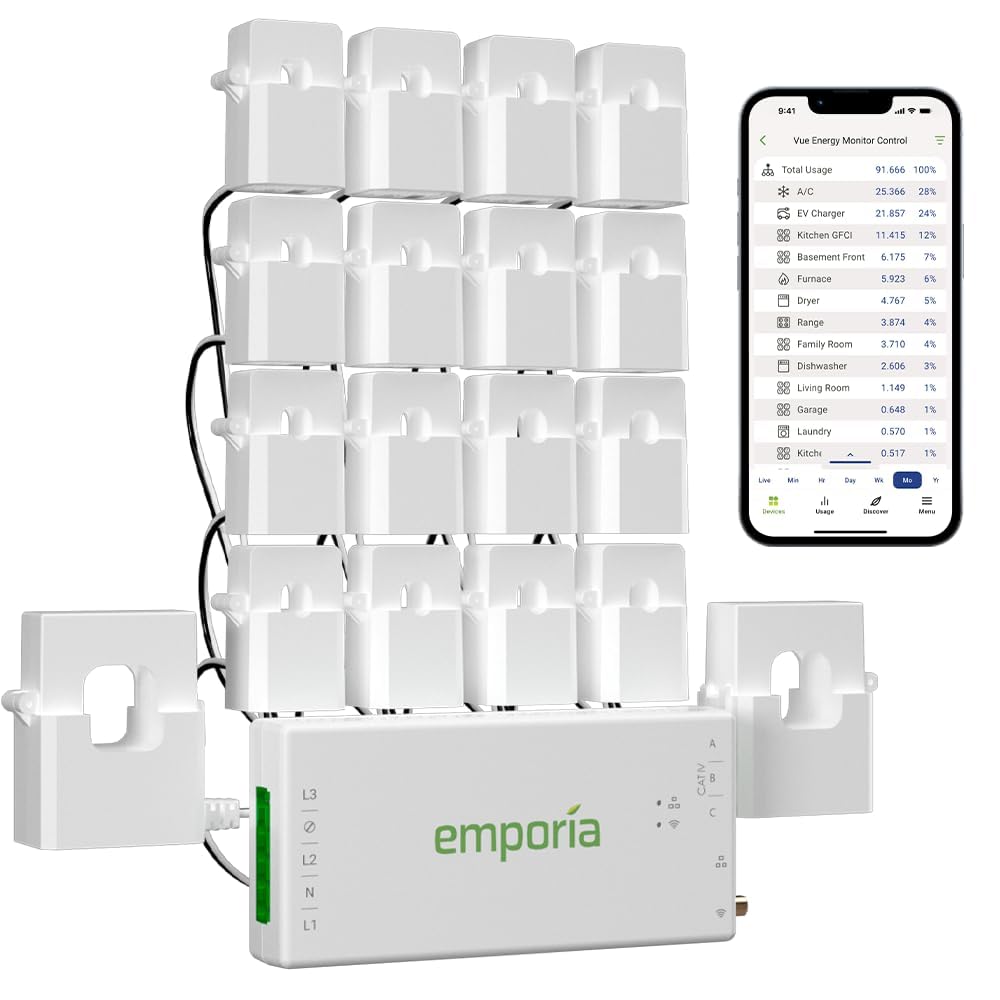
Type: Panel-mounted energy monitor module
Certification: UL certified
Metering: Solar and net metering
Function: Real-time electricity usage and power consumption
Integration: Smart home automation
The Vue 3 is the popular entry into circuit-level monitoring, built as a module that installs inside the electrical panel and reports live consumption to a companion app. UL certification is the headline here: it signals the unit was tested to a recognized safety standard, which matters for a device sitting next to live breakers. Solar and net metering support means a household with panels can watch production and consumption side by side rather than guessing from a utility bill.
The smart home automation angle gives it a second job beyond reporting — the module can feed usage data into broader routines. That suits owners who already run a connected home and want energy figures to trigger or inform other devices. It is the strongest fit for a solar household or a tech-forward owner who wants one dashboard for the whole service.
Trade-off: Panel installation involves opening the electrical panel and working near live conductors, so most buyers will need a licensed electrician, which adds cost the sticker does not show.
2. Emporia Vue 3 Home Energy Monitor (B0C79TVH4Y)
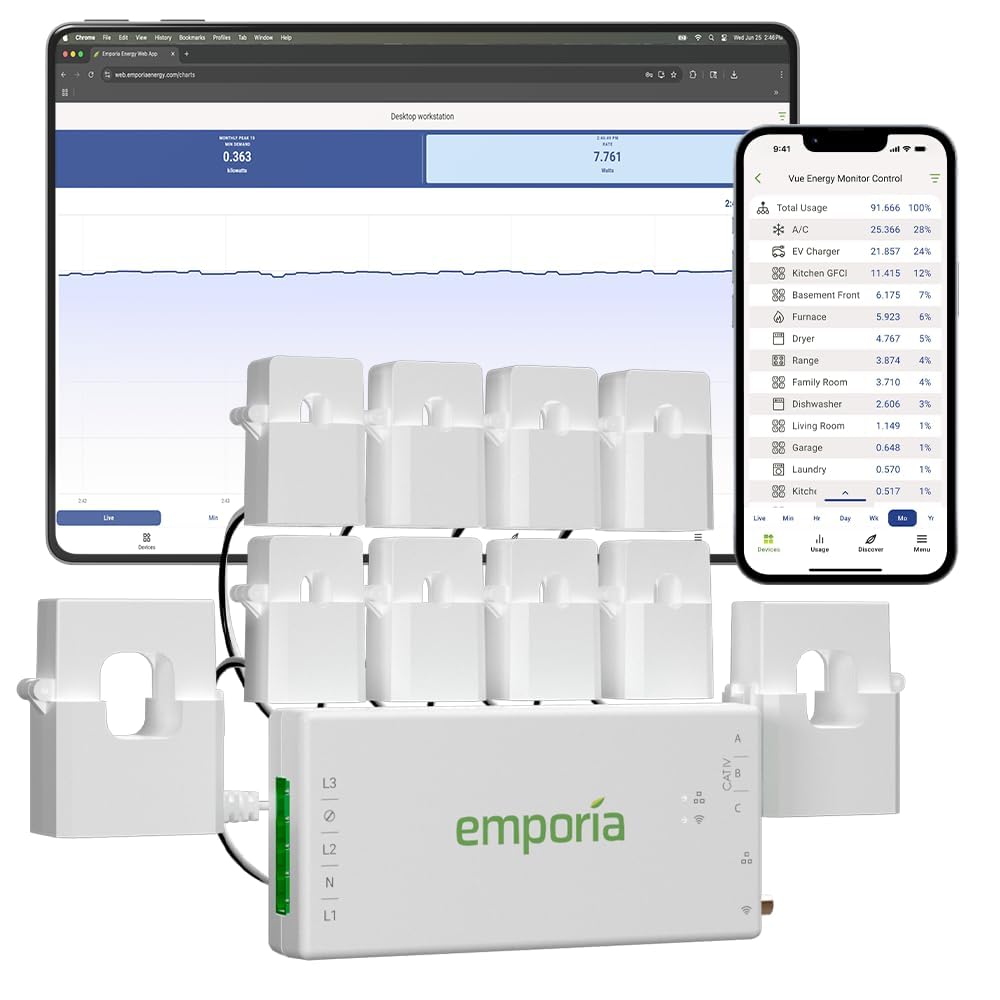
Type: Panel-mounted energy monitor module
Certification: UL certified
Metering: Solar and net metering
Function: Real-time electricity usage and power consumption
Integration: Smart home automation
This is the same Vue 3 platform as the pick above, listed under a separate ASIN and typically a different bundle configuration. The core capabilities carry over: UL certified construction, real-time power consumption reporting, and solar with net metering support. For a buyer comparing listings, the difference usually comes down to what is included in the box rather than the monitor itself.
It earns its place for households that want the Vue 3 feature set but are shopping a specific listing or bundle. The automation module keeps it relevant for connected-home setups, and the solar metering keeps it relevant for panel owners. Buyers who do not need solar tracking can still use it as a straightforward whole-home consumption meter.
Trade-off: Two near-identical Vue 3 listings can confuse shoppers, and the bundle differences are easy to miss without reading the box contents closely before ordering.
3. Smart Home Energy Monitor with 16 50A Circuit Level Sensors (B0D6VZQBPF)

Type: Circuit-level energy monitor
Sensors: 16 × 50A circuit sensors
Tracking: Real-time power usage and electricity cost
History: App-based usage history
Integration: Home Assistant compatible
Intended use: Rental homes and shared apartments
Sixteen 50A sensors give this unit broad branch-circuit coverage — enough to separate major loads like HVAC, water heating and kitchen circuits instead of watching one blended total. Cost tracking converts raw wattage into a running dollar figure, which is the number most households actually act on. App history rounds it out by letting a user look back at how usage shifted over days and weeks.
The rental and shared-apartment framing is the tell: this is aimed at people who split bills or want to attribute usage without touching the utility meter. Home Assistant compatibility pulls it into a local smart-home dashboard for anyone already running that platform. It is the value pick for a renter-friendly, sensor-heavy setup.
Trade-off: Sixteen clamps mean a crowded panel and a longer install, and a shared or rental unit may still require landlord approval before the cover comes off.
4. Refoss EM16P Smart Home Energy Monitor (B0DJNV3GPR)
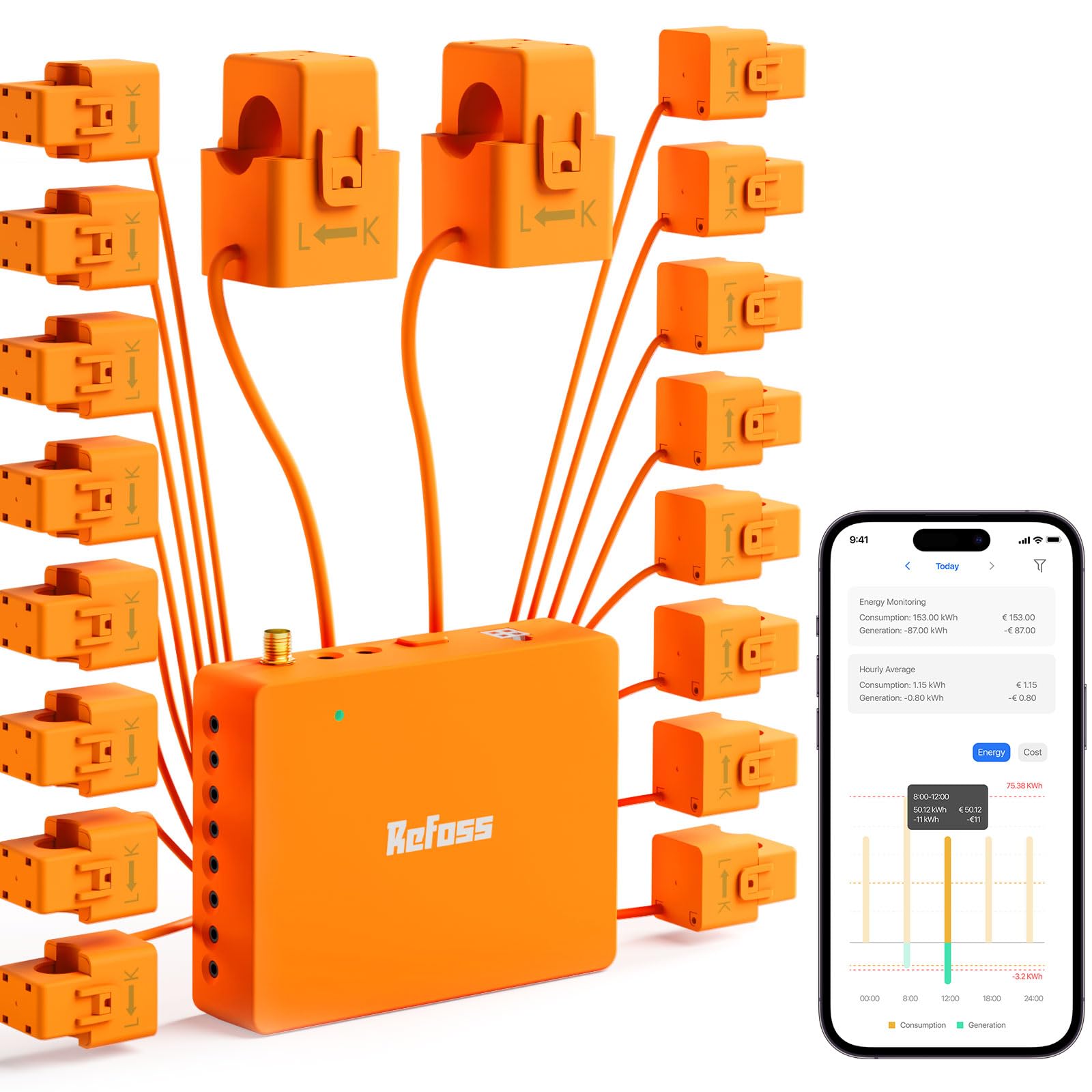
Type: Circuit-level energy monitor
Sensors: 16 × 60A circuit sensors
Certification: ETL certified
Metering: Solar metering
Integration: Open API, Home Assistant, no cloud
Function: Real-time electricity usage and power consumption
The EM16P leads with privacy and control: a no-cloud design keeps data on the local network, and an open API lets a technical owner pull readings into their own tools. Sixteen 60A sensors cover heavier branch circuits than the 50A units here, which helps on homes with large appliances on dedicated runs. ETL certification adds a recognized safety listing, and solar metering keeps production visible.
This is the pick for the buyer who runs Home Assistant and does not want a vendor cloud in the middle. The open API is the differentiator — it turns the monitor into a data source rather than a closed app. Owners who want a plug-and-play phone experience may find it more involved than they need.
Trade-off: A no-cloud, open-API device puts setup and ongoing maintenance on the owner, so it rewards tinkerers and frustrates anyone expecting a guided app wizard.
5. SIEMENS Inhab Smart Home Energy Monitor (B0CTTSC7DR)

Type: Panel-mounted energy monitor
Circuit sensors: 16 × 50A
Main sensors: 2 × 200A
Function: Real-time electricity monitoring and metering
Brand: Siemens
The Inhab pairs sixteen 50A branch sensors with two 200A main sensors, so it can report whole-service load and individual circuits in the same view. That main-sensor coverage is the premium differentiator: a 200A main clamp suits modern residential service and captures the total the utility actually bills against. Siemens branding brings the name recognition of a major electrical manufacturer to a panel-mounted device.
It suits an owner who wants both the big picture and the branch detail, especially in a larger home with 200A service. The combination makes it the most complete monitoring package in this group. Buyers with modest panels and no interest in main-level data will be paying for capacity they do not use.
Trade-off: Main and branch clamps together make for the most involved install of the five, and the premium positioning means the highest price tier here.
Before You Buy
- Panel compatibility: Check the service size and available breaker space — 200A main sensors suit modern panels, while branch-only units fit smaller setups.
- Sensor count and rating: Match sensor count to the circuits worth tracking, and confirm the amp rating covers the loads on those runs.
- Certification: Look for a recognized safety listing such as UL or ETL on any device installed inside a live panel.
- Solar and net metering: A household with panels needs metering that reads production and consumption separately.
- App and integration: Decide between a polished phone app and a local, open-API setup that works with Home Assistant.
- Install cost: Budget for a licensed electrician, since panel work near live conductors is not a typical DIY job.
- Data handling: A no-cloud design keeps readings local; a cloud app offers easier remote access but stores data off-site.
Frequently Asked Questions
-
What is power quality monitoring for a home?
It is the practice of tracking electricity use at the panel — total draw and individual circuits — to spot waste, verify solar production and understand what drives the bill. -
Does a home energy monitor need an electrician?
Most install inside the electrical panel near live conductors, so a licensed electrician is the safe route for the majority of households. -
Can these monitors track solar production?
The Emporia Vue 3 units and the Refoss EM16P list solar metering, which lets a household compare production against consumption. -
Which pick suits a renter or shared apartment?
The 16-sensor circuit monitor is framed for rental homes and shared apartments, with app history for attributing usage. -
What does "no cloud" mean on the Refoss EM16P?
Readings stay on the local network rather than a vendor server, and an open API lets the owner route data into their own system. -
Is a 200A main sensor necessary?
It captures whole-service load on a modern panel; households that only need branch detail can choose a branch-only unit instead.
Bottom Line
For most households, the Emporia Vue 3 Home Energy Monitor is the safest starting point — UL certified, solar-ready and built for smart home integration. Buyers who want local, cloud-free data should look at the Refoss EM16P, and anyone needing main-level coverage should step up to the Siemens Inhab.
