Why there are Amazon links here: Brave Review is paid a commission for qualifying Amazon purchases made through the links below. Your price does not change, and using our links is entirely optional. How this works
Schlage Arrive Smart WiFi Deadbolt Lock: Keyless Entry Without the Hub
The Schlage Arrive Smart WiFi Deadbolt Lock is a push-button keypad deadbolt with WiFi built into the lock itself, so there is no separate bridge or hub to buy and plug in. It suits homeowners who want keyless entry, app control, and voice commands without building out a smart-home ecosystem first. This review covers how the lock is built, what the built-in WiFi actually changes, and where it falls short — so a buyer can decide quickly whether it fits their door and their habits.
Features and Specifications
Type: Keyless entry deadbolt with push-button keypad
Connectivity: Built-in WiFi with app control
Voice Assistants: Alexa, Google Home, and Ring compatible
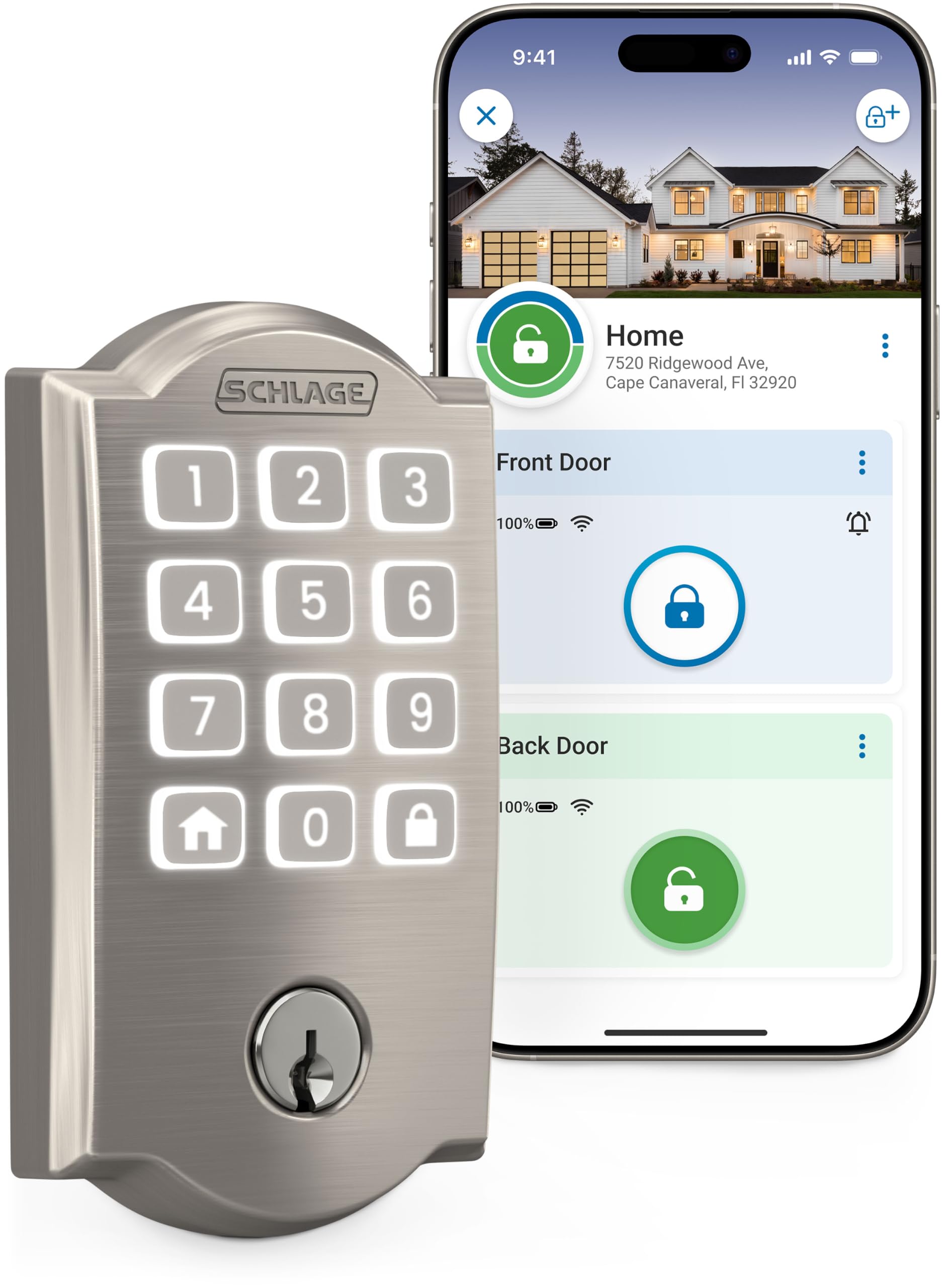
Trim: Camelot trim in satin nickel
Entry Method: Push-button keypad and companion app
Security: Certified security rating
The headline here is the built-in WiFi. Most keypad deadbolts in this class need a separate bridge to reach the internet, and that bridge is one more box, one more plug, and one more thing to troubleshoot. The Arrive folds that radio into the lock, so app control and voice commands work from the moment the lock is paired to the home network.
The Camelot trim is Schlage’s traditional scalloped profile, and satin nickel is a soft brushed silver that reads warmer than polished chrome and hides fingerprints better. On a painted front door or a stained wood entry, that combination looks at home. On a very modern slab door with sharp square hardware, the curved trim will look a little out of place.
The push-button keypad is the other design decision worth noting. Buttons are physical and tactile, which means a code can be entered with a glove on or in the dark, and there is no touchscreen glass to smudge or scratch. The trade-off is that a worn keypad can, over years of use, show which digits get pressed most — a reason to change codes periodically and to avoid codes built from four of the same few numbers.
Built-In WiFi and What It Changes
A WiFi radio inside a battery-powered lock is the whole pitch, and it is worth being clear about what it buys. Remote lock and unlock from the app works without any extra hardware, which matters for letting a dog walker in, checking whether the door was locked after leaving, or unlocking for a contractor while at work. Voice commands through Alexa, Google Home, and Ring follow from the same connection.
That convenience has a cost in battery life. A lock that holds a live WiFi connection draws more power than one that only wakes for a keypad press, so batteries will need replacing more often than on a bare keypad deadbolt. Buyers should expect to keep spare batteries on hand and to pay attention to the low-battery warning in the app rather than discovering the problem at the door.
There is also a network dependency worth naming. If the home WiFi drops or the router is replaced, remote features stop until the lock is reconnected. Keypad entry keeps working, so nobody gets locked out, but the app and voice features are only as reliable as the network behind them. Buyers with a weak signal at the front door should check coverage before committing, since the lock has to reach the router from the door itself.
Keypad, App, and Daily Use
For everyday entry, the keypad is the part that gets used most, and push buttons are the right call for a family. Codes can be shared with family members and guests, and temporary codes can be issued and revoked from the app rather than rekeying anything. That is the practical advantage over a keyed deadbolt: no spare key under the mat, no locksmith visit when a roommate moves out.
The app is where scheduling and code management live, and it is also where the lock reports status. A buyer who wants to confirm the door is locked without walking back to it will get that from the app, and the same status feeds automations through the compatible assistants. Setup runs through the app and the home network, which is the step that decides whether the install feels easy or frustrating.
Installation itself is a standard deadbolt swap: the lock replaces an existing deadbolt in the same door preparation, and the interior and exterior halves clamp through the door. Buyers replacing an old deadbolt with the same backset and door thickness will find the job familiar. Doors that need new boring, or doors with unusual prep, are a different project and may call for a professional.
Security and Build
The lock carries a certified security rating, which is the baseline a buyer should expect at this price. The deadbolt throws into the door frame the same way a conventional deadbolt does, and the keypad and app sit on top of that mechanical foundation rather than replacing it. Buyers who want the reassurance of a certified cylinder are getting it here.
The satin nickel finish over the Camelot trim is a plated finish, and plated finishes on exterior hardware wear with sun, salt, and repeated cleaning. In coastal air or on a door that takes direct afternoon sun, the finish will show its age sooner than the mechanism will. A periodic wipe with a soft cloth and a non-abrasive cleaner is the maintenance that keeps it looking right.
One honest caution about the category rather than this specific lock: any smart lock is a small computer on the outside of the house, and its security depends on the code hygiene of the household. A short, obvious code undermines a certified deadbolt. Long codes, changed periodically, and revoked guest access are what make the smart features an upgrade rather than a liability.
Trade-off: The built-in WiFi that removes the need for a hub also drains batteries faster and ties remote features to the reliability of the home network, so buyers who want maximum battery life or who have weak WiFi at the door may prefer a hub-based or keypad-only lock.
Who It Suits and Who It Does Not
The Schlage Arrive fits households that want keyless entry and remote access without buying into a hub, and that already have solid WiFi at the front door. Families sharing codes, renters-turned-owners replacing a builder-grade deadbolt, and anyone tired of hiding a spare key are the core buyers. The Camelot trim also suits traditional and transitional exteriors where a curved, satin-nickel profile belongs.
It is not the right pick for a buyer who wants the longest possible battery life and does not care about remote access — a keypad-only deadbolt will serve that person better. Nor is it ideal for a door with poor WiFi coverage, or for a very contemporary exterior where the scalloped trim will clash. Buyers who want a touchscreen rather than push buttons should look at a different model in the lineup.
FAQ
-
Does the Schlage Arrive need a hub or bridge?
No. WiFi is built into the lock, so app control and voice commands work without a separate bridge. The lock connects directly to the home network. -
Will it work with Alexa, Google Home, and Ring?
Yes. The lock is listed as compatible with Alexa, Google Home, and Ring, so voice commands and status checks can run through those assistants once the lock is paired. -
What happens if the WiFi goes down?
Keypad entry keeps working, so the door still opens with a code. Remote app access and voice commands pause until the lock reconnects to the network. -
How often do the batteries need replacing?
More often than on a keypad-only deadbolt, because the WiFi radio draws continuous power. The app reports low battery, and keeping spare batteries on hand avoids a surprise. -
Can codes be shared with guests and removed later?
Yes. Codes are managed in the app, and temporary or guest codes can be issued and revoked without rekeying the lock or collecting a physical key. -
Is the keypad a touchscreen?
No. It uses physical push buttons, which can be pressed with gloves on and do not smudge like glass. The trade-off is that heavy use can wear the finish on the most-pressed digits over time. -
Will it fit an existing deadbolt hole?
In most cases, yes. The lock is designed as a standard deadbolt replacement for doors with conventional prep. Doors with unusual boring or thickness may need adaptation or professional installation. -
What finish is the lock?
Satin nickel, on Schlage’s Camelot trim. It is a brushed silver that suits traditional and transitional doors and resists showing fingerprints. -
Does the finish hold up outdoors?
Plated finishes wear with sun, salt, and repeated cleaning. In coastal air or direct sun, expect the finish to age before the mechanism does, and clean with a soft cloth and non-abrasive product. -
Is it a good fit for a rental property?
It can be, since codes can be changed between guests without rekeying. The caveat is that remote features depend on the property’s WiFi, so coverage at the door needs to be reliable.
Bottom Line
The Schlage Arrive Smart WiFi Deadbolt Lock is the pick for a buyer who wants keyless entry, app control, and voice commands without buying a hub — provided the WiFi reaches the front door and the Camelot trim suits the house. Its push-button keypad and certified deadbolt make daily entry simple, and the trade-off is battery life and network dependence, which are the honest costs of putting WiFi inside the lock. Buyers who want maximum battery life or a touchscreen should look elsewhere; everyone else can check the current price and confirm the fit.
