Why there are Amazon links here: Brave Review is paid a commission for qualifying Amazon purchases made through the links below. Your price does not change, and using our links is entirely optional. How this works
Tapo RV30 Max Plus: A Self-Emptying Vacuum Built for Pet Hair
The Tapo RV30 Max Plus is a robot vacuum and mop aimed at households where pet hair and daily floor traffic make manual cleaning a losing battle. It pairs LiDAR navigation with dual-laser obstacle avoidance, a self-emptying dock and an anti-tangle brush system, and it sits in the mid-range of the robot vacuum market. This review covers what the hardware actually does, where the design makes sense, and which buyers should look elsewhere before spending.
Features and Specifications
- Model: Tapo RV30 Max Plus
- Navigation: TapoLiDAR plus dual-laser obstacle avoidance
- Suction: 15,000Pa
- Brush System: Anti-tangle design for pet hair
- Mopping: DeepEdge mopping
- Dock: Self-emptying and self-cleaning
- Price Tier: Mid-range premium
The specification sheet reads like a list of the features buyers ask about most in this category. LiDAR mapping handles room layout and route planning, while the dual-laser array is there to spot obstacles the main sensor would otherwise miss. The 15,000Pa suction figure is high for the price tier, and the self-emptying dock removes the most tedious part of robot vacuum ownership.
What separates this model from cheaper robots is the combination rather than any single number. A vacuum with strong suction but no obstacle avoidance spends its runtime tangled in cables. A robot with good navigation but a small dustbin forces daily emptying. The RV30 Max Plus attempts to close both gaps at once, and the self-cleaning dock adds a maintenance step most rivals leave to the owner.
Build and Navigation
The TapoLiDAR module sits at the top of the chassis and spins to build a map of each room, which is what allows the robot to clean in structured passes rather than random bouncing. Dual-laser obstacle avoidance works at floor level, watching for items the top-mounted sensor cannot see — shoes, pet bowls, charging cables, the things that stop lesser robots dead.
That combination matters most in cluttered homes. Open-plan rooms with furniture legs and dropped items are where laser avoidance earns its place, because a robot that stops cleanly and routes around an obstacle finishes a run instead of stranding itself. Buyers with tidy, open floors get less from this feature and could reasonably pay less for a model without it.
The trade-off here is complexity. More sensors mean more to keep clean, and the laser window and LiDAR housing both need occasional wiping to stay accurate. A simpler bump-and-roll robot asks less of its owner, even if it cleans less efficiently.
Suction, Brushes and Pet Hair
The 15,000Pa rating puts this vacuum near the top of what the mid-range offers, and suction is the specification that decides performance on carpet. Higher suction lifts embedded hair and grit from pile that weaker robots skim over, and it gives the vacuum a better chance on rugs and mats where pet hair settles.
The anti-tangle brush system is the more interesting claim for pet owners. Long hair and pet fur wrap around conventional roller brushes until the bristles stop contacting the floor, which is why so many robot vacuums underperform in homes with shedding animals. An anti-tangle design attacks that failure mode directly, and it is the single feature most likely to determine whether this robot stays useful after six months.
Trade-off: The high suction and self-emptying dock make this a large, heavy machine, so buyers in small apartments or homes with tight thresholds should confirm it fits before committing.
Mopping and the DeepEdge System
DeepEdge mopping describes how the mop pad reaches along walls and into corners rather than stopping short of the skirting board. Edge cleaning is a genuine weak point in robot mops, because a spinning or vibrating pad mounted centrally cannot reach the last strip of floor without an offset design. Buyers who notice dirty lines along the kitchen wall will care about this.
It is worth being clear about what a robot mop of this type does. It maintains hard floors — light dust, dried spills, everyday grime — and it is not a substitute for a manual mop on sticky or greasy messes. Homes with mostly hard flooring get steady value from it; homes that are almost entirely carpeted get very little.
The mop function also adds maintenance. Pads need washing or replacing, and the water tank needs filling before a run. Buyers who want a pure vacuum and nothing else are paying for hardware they will not use.
The Self-Emptying and Self-Cleaning Dock
The dock is the feature that changes daily ownership. Instead of emptying a small onboard bin after every run, the robot returns to the base and transfers its contents into a larger bag or container, which then only needs attention occasionally. For pet owners generating a steady supply of hair, that difference is substantial.
Self-cleaning refers to the dock’s handling of the mopping hardware, reducing the manual scrubbing that mop pads normally require. Together these two functions move most of the routine maintenance away from the robot and onto the base station, which is exactly where buyers want it.
Trade-off: The dock is bulky and needs clear floor space plus a power outlet, and it is the part of the system most likely to need eventual replacement parts, so buyers should budget for consumables over the machine’s life.
Who Should Buy It
This vacuum suits pet owners first. The anti-tangle brush, the high suction and the self-emptying dock all address the specific problems that shedding animals create, and that combination is why the model has drawn steady interest since launch.
It also suits households with a mix of carpet and hard flooring, where the vacuum and mop functions both get used, and buyers who want mapping and obstacle avoidance without stepping up to the most expensive tier of the market. Anyone who has owned a random-navigation robot and grown tired of rescuing it will notice the difference immediately.
It is not for buyers with very small homes, where a bulky dock and a large robot are hard to justify. It is not for households that are almost entirely carpeted, since the mopping hardware would sit unused. And it is not for anyone who wants the absolute lowest price — this is a mid-range machine and it is priced like one.
FAQ
-
What is the Tapo RV30 Max Plus?
It is a robot vacuum and mop with LiDAR navigation, dual-laser obstacle avoidance, 15,000Pa suction, an anti-tangle brush system and a self-emptying, self-cleaning dock. -
Is the Tapo RV30 Max Plus good for pet hair?
The anti-tangle brush system and high suction are both aimed at pet hair, and the self-emptying dock means frequent runs do not require frequent bin emptying. It is one of the stronger mid-range options for shedding animals. -
Does it mop as well as it vacuums?
The DeepEdge mopping system maintains hard floors and reaches along edges, but it handles light grime rather than heavy or sticky messes. Buyers wanting deep mopping still need a manual mop. -
What does the self-emptying dock actually do?
The robot returns to the base after a run and transfers the contents of its onboard bin into the dock, so the owner empties the base far less often than a standard bin. -
Does it need a smartphone app?
LiDAR mapping and scheduled cleaning on a robot of this type are managed through an app, which is also where maps and no-go zones are set up. -
Will it get tangled in cables and pet toys?
The dual-laser obstacle avoidance is designed to detect and route around floor-level obstacles, which reduces the chance of tangling. Small items left in its path can still cause problems. -
Is it suitable for carpets?
Yes, and the high suction is an advantage on carpet. The mopping function only applies to hard floors, so heavily carpeted homes get less from the machine overall. -
How much maintenance does it need?
Less than a standard robot vacuum, because the dock handles bin emptying and mop pad cleaning. The LiDAR housing, laser window and dock components still need periodic cleaning and eventual replacement parts. -
Who should not buy it?
Buyers in very small homes, households with almost no hard flooring, and shoppers who want the cheapest working robot vacuum should look at simpler models. -
Is the Tapo RV30 Max Plus worth the price?
For pet owners with mixed flooring who want mapping, obstacle avoidance and a self-emptying dock in one machine, the feature set justifies the mid-range price. Buyers who will not use the mop or the dock are paying for hardware they do not need.
Bottom Line
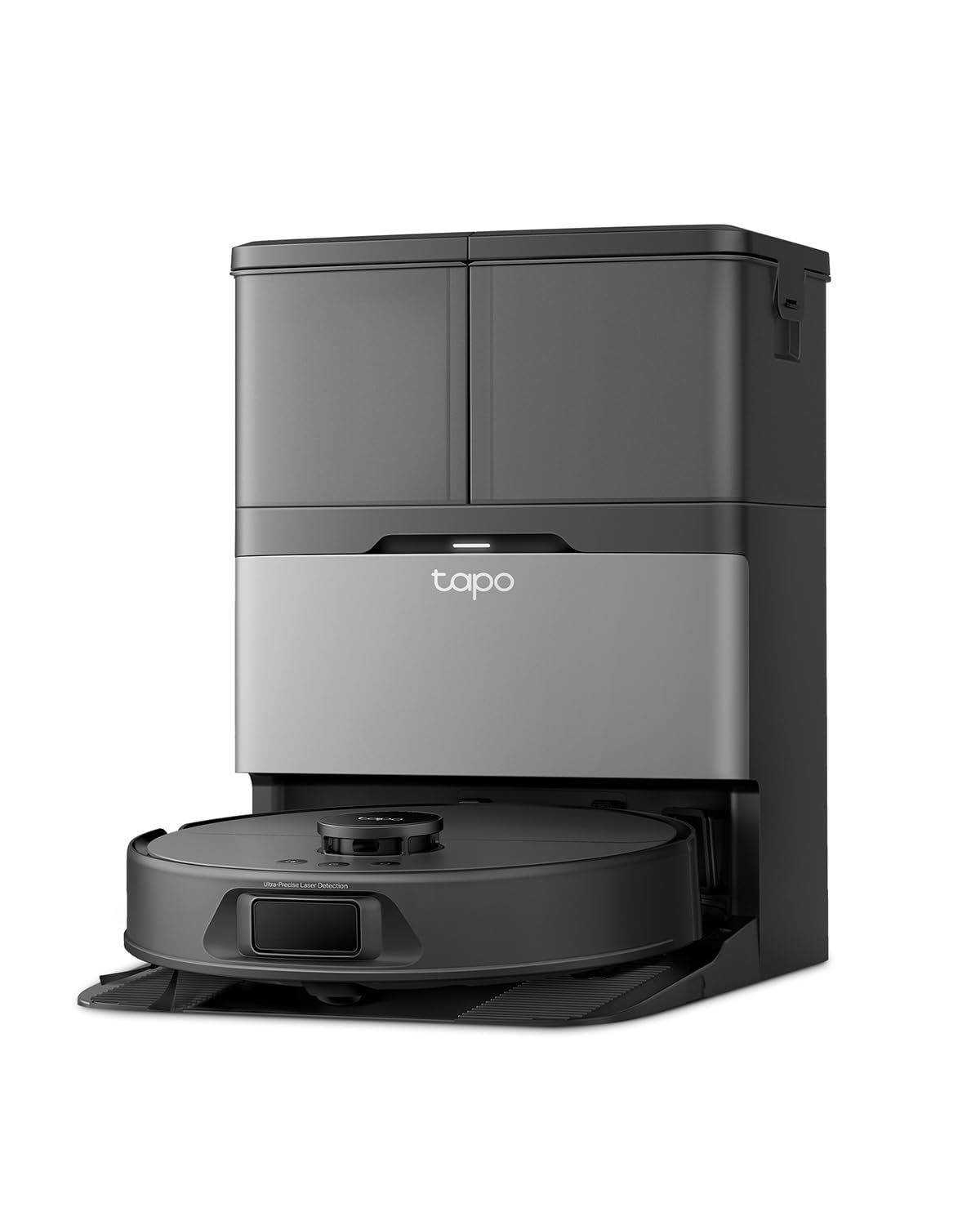
The Tapo RV30 Max Plus is the strongest fit for pet owners who want to stop thinking about floor hair. LiDAR mapping, dual-laser avoidance, 15,000Pa suction and an anti-tangle brush cover the cleaning side, and the self-emptying dock covers the part owners resent. Buyers with mostly carpet, tiny floors or a strict budget should look at simpler machines — everyone else can check the current price on Amazon and decide from there.
