Why there are Amazon links here: Brave Review is paid a commission for qualifying Amazon purchases made through the links below. Your price does not change, and using our links is entirely optional. How this works
Best Weather Resistance for Exposed Doors: 5 Seals That Keep Drafts and Rain Out
Weather resistance for exposed doors comes down to one thing: closing the gap between door and frame so wind, rain, dust and cold air stay outside. This roundup covers five seals that do that job at different budgets and for different frame types. It suits homeowners patching a drafty back door, renters sealing a gap without drilling, and anyone fitting a new exterior door who wants the frame sealed properly the first time. The overview table below puts all five side by side before the individual reviews.
Overview of the Picks
| Product | Key Spec | Best Use | Price Tier |
|---|---|---|---|
| 20FT Silicone D-Shaped Seal Strip | 20 ft roll, self-adhesive, D profile | General door and window gaps | Budget |
| 40FT Kerf Weather Stripping | 40 ft roll, kerf style, large gap | Full door frame replacement | Mid-range |
| Self Adhesive Silicone D Seal, 20Ft | 20 ft roll, 3/8" W × 1/4" T | Narrow frame gaps | Budget |
| Push-In Kerf Seal for Grooved Frames | 40 ft, push-in, fits 1/4–1/2 in gaps | Grooved frames, no adhesive | Mid-range |
| TPE D-Shaped Seal Strip, 20Ft | 20 ft roll, TPE, 3/8" W × 1/4" T | Cheapest draft blocking | Budget |
20FT Weather Stripping Door Seal, Self-Adhesive Silicone D-Shaped Seal Strip

Type: Self-adhesive D-profile seal strip
Length: 20 ft
Material: Silicone
Profile: D-shaped
Intended use: Door frames and window gaps
Installation: Peel-and-stick
This is the general-purpose pick: a silicone D-profile strip that presses into the gap between door and frame and stays put on clean, dry surfaces. Silicone holds up better than foam against repeated door swing and damp weather, which matters on an exposed exterior door. The 20 ft roll covers a standard door frame with enough left over for a window or a second door. It is the simplest option for someone who wants the job done in an afternoon without removing trim.
It earned its place as the default recommendation because it works on almost any frame and needs no special tools. The trade-off is that adhesive-backed seals depend on surface prep — a dusty or damp frame will shorten the bond, and a heavy door rubbing the strip can wear it loose over time.
Check the current price on Amazon
40FT Kerf Weather Stripping for Doors, Door Frame Seal, Large Gap
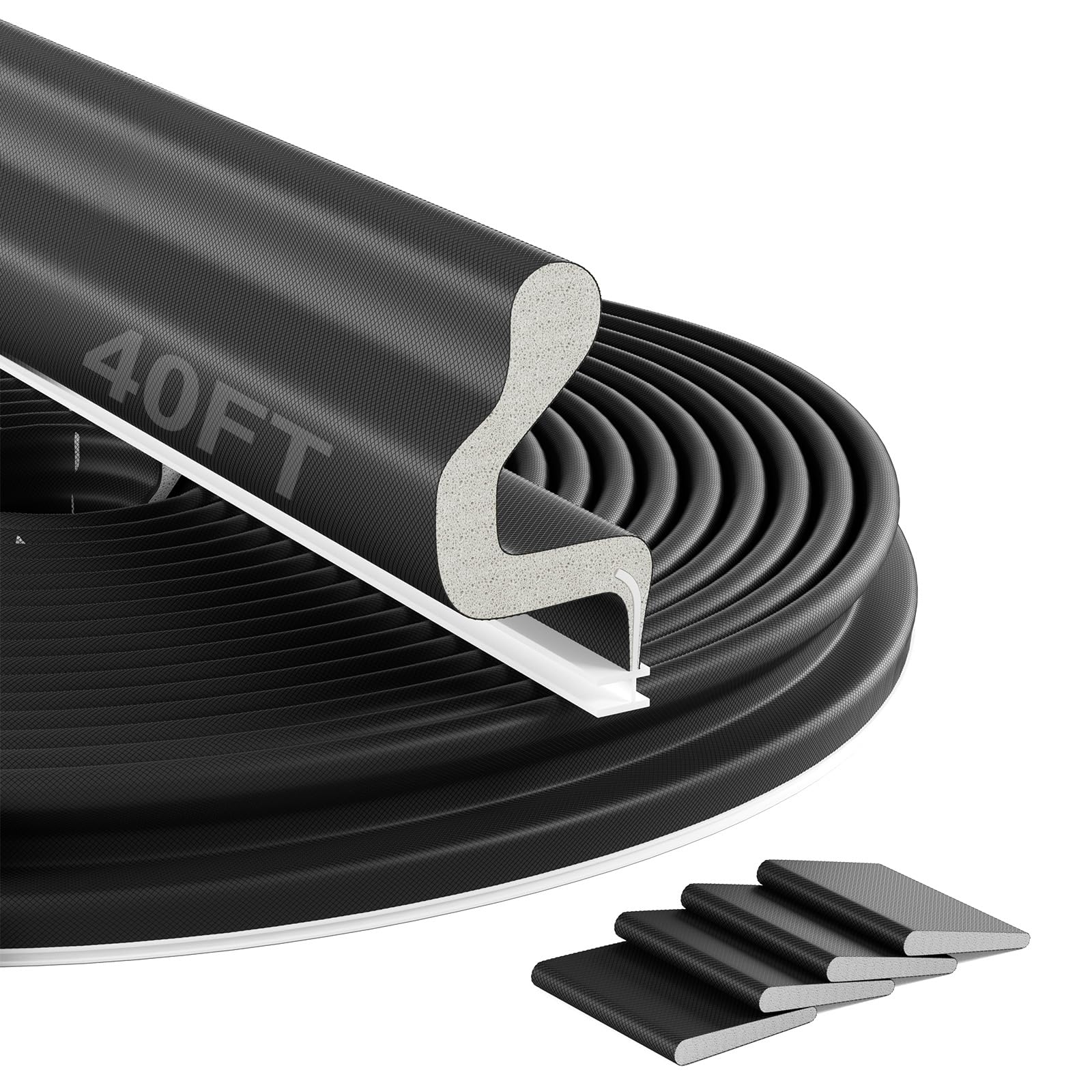
Type: Kerf weather stripping
Length: 40 ft
Intended use: Door frames
Gap coverage: Large gap
Installation: Kerf-style insertion
Kerf stripping is the type that slots into the groove cut into a door frame, which is how most modern exterior doors are built. This 40 ft roll is sized for full replacement on one or more doors, and the large-gap rating makes it the right call when the door has visibly pulled away from the frame. Because it sits in the kerf rather than on the surface, it holds position through years of slamming and weather.
It suits anyone replacing worn factory weatherstripping or sealing a door that has settled. The trade-off is fit: kerf seals only work on frames with an existing groove, so older surface-mount frames and renters who cannot modify the door will need one of the adhesive picks instead.
Check the current price on Amazon
Self Adhesive Weather Strip Silicone D Shaped Door Seal Strip, 20Ft, Black

Type: Self-adhesive D-profile seal strip
Length: 20 ft
Dimensions: 3/8" W × 1/4" T
Material: Silicone
Color: Black
Intended use: Door frames and windows
This one is close to the first pick in concept but gives the buyer exact dimensions up front: 3/8 inch wide and 1/4 inch thick. That profile is a good match for a frame gap that is narrow but consistent, where a thicker strip would make the door hard to close. The silicone body compresses and springs back, so the seal keeps contact through seasonal swelling and shrinking of the door.
It suits buyers who have measured their gap and know a slim D profile will fit, and it is a sensible choice for a window or a light interior-to-exterior door. The trade-off is that a 1/4 inch thickness leaves little margin on a wide or uneven gap — a door that is visibly out of square needs a thicker seal or kerf replacement rather than this strip.
Check the current price on Amazon
Push-In Kerf Seal for Grooved Frames, Not Self-Adhesive

Type: Push-in kerf seal
Length: 40 ft
Gap coverage: Fits 1/4–1/2 in gaps
Installation: Push-in, not self-adhesive
Intended use: Exterior doors with grooved frames
Color: Black
This is the pick for grooved frames where adhesive is not wanted or has failed before. The push-in design seats into the kerf and relies on friction and the frame groove rather than glue, so there is no sticky residue to clean up and nothing to peel loose in cold weather. The stated 1/4 to 1/2 inch gap range covers the wide end of typical door clearances, which is where drafts are worst on an exposed exterior door.
It earned its place for exterior doors that take real wind and rain, since a seated kerf seal does not depend on a bond holding. The trade-off is that it only fits frames with a groove of matching depth — a door without a kerf, or one with a shallow groove, cannot use it at all.
Check the current price on Amazon
Weather Stripping Door Seal Strip, D-Shaped Self-Adhesive, TPE, 20Ft
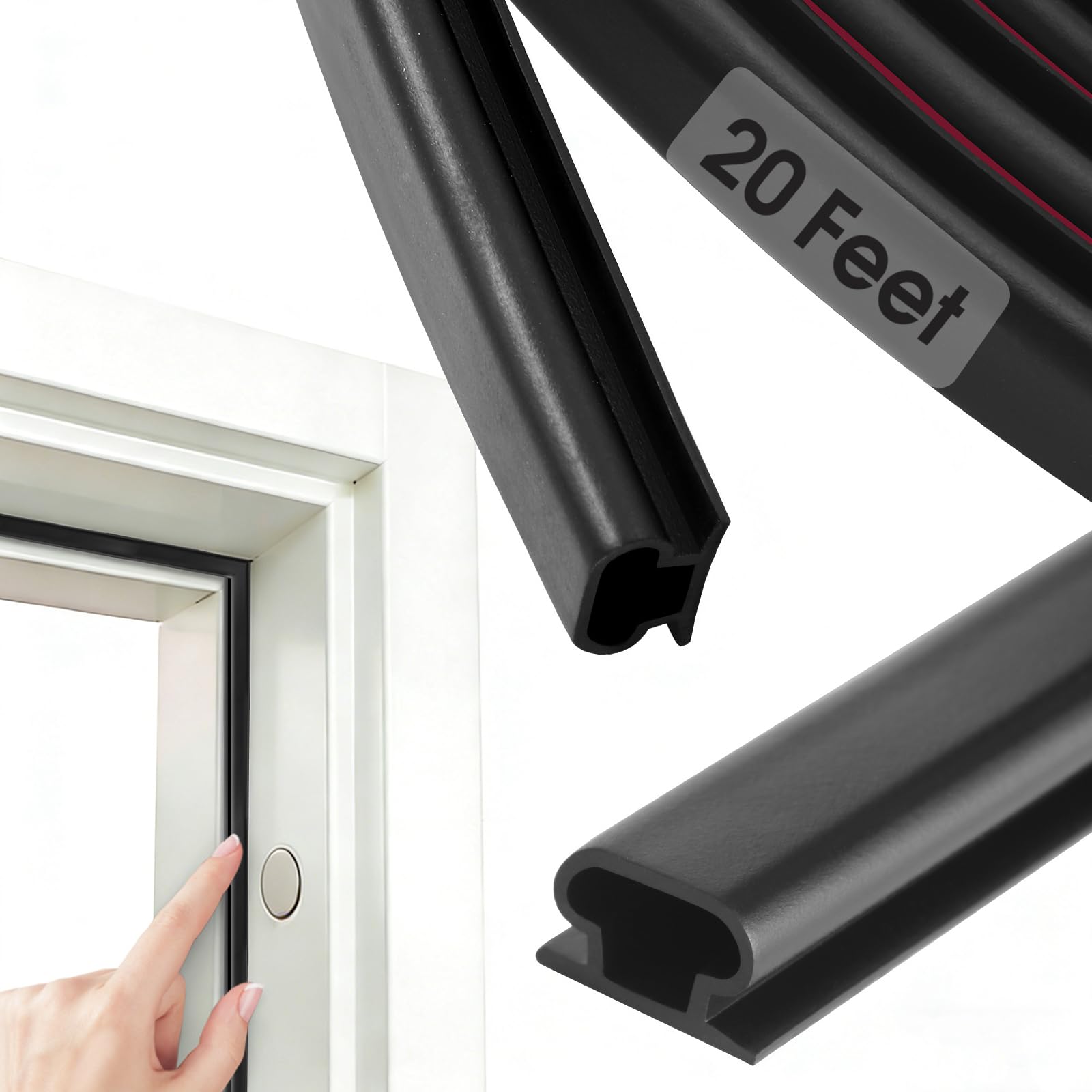
Type: Self-adhesive D-profile seal strip
Length: 20 ft
Dimensions: 3/8" W × 1/4" T
Material: TPE
Color: Black
Intended use: Door frames and windows
This is the budget entry: the same slim D profile as the silicone strip above, made from TPE rather than silicone and priced as the cheapest seal in the group. TPE is a flexible rubber-like material that compresses well, and it does the core job of blocking cold drafts and dust on an interior or sheltered exterior door. For a quick fix on a secondary door, it is hard to argue with the price.
It suits renters and anyone sealing a door they do not plan to keep long-term. The trade-off is durability in harsh exposure: TPE is generally less resistant than silicone to long-term sun and temperature cycling, so on a fully exposed door the savings may be paid back in a shorter service life.
Check the current price on Amazon
Before You Buy
- Frame type: Grooved frames need a kerf seal; flat frames need a self-adhesive strip. Check the frame before ordering.
- Gap size: Measure the gap at its widest point. A 1/4 inch strip will not bridge a 1/2 inch gap, and an oversized strip can stop the door closing.
- Material: Silicone resists weather and repeated compression best; TPE costs less but is the budget compromise on a fully exposed door.
- Length: A standard door frame usually needs 20 ft or less. A 40 ft roll covers multiple doors or a door plus windows.
- Surface prep: Adhesive seals need a clean, dry, dust-free frame. Wipe it down and let it dry before applying.
- Door clearance: A thick seal on a tight-fitting door can cause rubbing. Test the door swing before committing the full roll.
- Existing hardware: Weatherstripping works alongside a door sweep and threshold. A seal alone will not stop water coming in under the door.
Frequently Asked Questions
-
What is the best weather resistance for exposed doors?
A kerf seal seated in a grooved frame is the most durable option for a fully exposed exterior door, because it does not rely on adhesive. For flat frames, a silicone self-adhesive D strip is the practical choice. -
How do I know which seal fits my door?
Check two things: whether the frame has a groove (kerf) or a flat surface, and the width of the gap at its widest point. Match the seal type to the frame and the profile thickness to the gap. -
Can weatherstripping stop rain from coming in?
A door seal blocks wind-driven drafts and spray around the edges, but water running under the door needs a threshold or door sweep. The two work as a system. -
How long does self-adhesive weatherstripping last?
It depends on exposure and surface prep. A clean, dry application on a sheltered door lasts longer; a fully sun-exposed door will wear the adhesive and material faster, especially with cheaper TPE strips. -
Is silicone better than TPE for an exterior door?
Silicone generally handles sun, temperature swings and repeated compression better over time. TPE is a reasonable budget option for sheltered or secondary doors. -
Can I use a door seal on windows too?
Yes. The self-adhesive D-profile strips in this roundup are listed for both door frames and windows, and the leftover length from a 20 ft roll usually covers a window.
Bottom Line
For most exposed exterior doors, the 40FT Kerf Weather Stripping is the top pick: it seats into a grooved frame, covers large gaps, and does not depend on adhesive holding through a wet winter. Buyers with flat frames should go with the 20FT Silicone D-Shaped Seal Strip instead, and anyone sealing a sheltered or secondary door on a tight budget can save with the TPE strip.