Why there are Amazon links here: Brave Review is paid a commission for qualifying Amazon purchases made through the links below. Your price does not change, and using our links is entirely optional. How this works
Best Heat Alarm for a Cupboard with a Tumble Dryer
A tumble dryer in a closed cupboard is one of the harder spots in a home to protect: ordinary smoke alarms dislike the damp, linty air, and the cupboard door hides a fire until it is well established. The five heat alarms below are the realistic options, split between hardwired household units, addressable commercial sensors and fixed-temperature detectors. The overview table shows the differences at a glance; each review below explains who the pick suits and where it falls short.
Overview of the Picks
| Product | Key Spec | Best Use | Price Tier |
|---|---|---|---|
| First Alert BRK HD6135FB | Hardwired, 9V battery backup | Standard household cupboard alarm | Mid |
| First Alert Hard Wired Heat Alarm | Thermistor sensor, 50 ft detection | Budget hardwired replacement | Budget |
| Simplex 4098-9734 TrueAlarm | Addressable, selectable temperature | Commercial or managed systems | Premium |
| Kidde Heat Detector | Hardwired, two LEDs, interconnect | Garages and utility rooms | Mid |
| System Sensor 5604 | 194°F fixed temperature, single circuit | High-temperature plant rooms | Budget to mid |
First Alert BRK HD6135FB Hardwired Heat Alarm

Type: Hardwired heat alarm with battery backup
Power source: Mains wiring with 9V battery backup
Sensor: Heat sensing element
Model: HD6135FB
Brand: First Alert BRK
Intended use: Household interiors, including utility cupboards
First Alert BRK HD6135FB Hardwired Heat Alarm with Battery Backup
This is the straightforward household answer to the problem: a mains-powered heat alarm that keeps working from a 9V battery if the circuit drops. The sensing element responds to a rapid temperature rise rather than to smoke, so steam from a vented dryer and lint in the air do not set it off. The BRK housing is designed to sit on a ceiling or high wall and is wired into the existing lighting circuit like any other hardwired alarm. Buyers who want a familiar, fit-and-forget unit in a cupboard above or beside the dryer are the core audience here.
It earns its place because the battery backup removes the most common failure point of a hardwired-only device, and the model is widely understood by electricians. The trade-off is that mains wiring is not a DIY job for everyone — a qualified electrician is the sensible route, which adds to the installed cost.
Trade-off: The unit needs a permanent mains feed, so the total cost includes an electrician’s time, not just the alarm.
First Alert Hard Wired Heat Alarm, 120 V
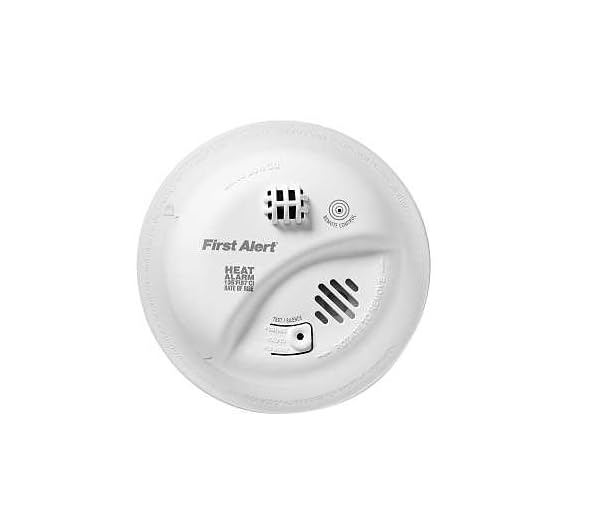
Type: Hardwired heat alarm with battery backup
Power source: 120 V mains with battery backup
Sensor: Thermistor
Detection: 50 ft coverage
Alarm: 85 dB sounder
Intended use: Household ceilings and cupboards
First Alert Hard Wired Heat Alarm, 120 V
The thermistor sensor is the notable part of this model: it reads temperature electronically rather than relying on a mechanical element, which tends to mean a steadier response in a warm, enclosed space. The stated 50 ft detection range and 85 dB sounder are both generous for a cupboard, and the 120 V hardwiring with battery backup follows the same pattern as the unit above. It is the pick for a buyer replacing an old alarm on existing wiring and wanting the lowest outlay.
Its place in the roundup is the budget slot, and the specification list supports that positioning without obvious gaps. The caution is about compatibility: buyers should confirm the existing mounting base and wiring arrangement before ordering, because a mismatch turns a cheap alarm into a return.
Trade-off: The low price tier makes base and wiring compatibility the buyer’s responsibility to check before ordering.
Simplex 4098-9734 TrueAlarm Heat Sensor
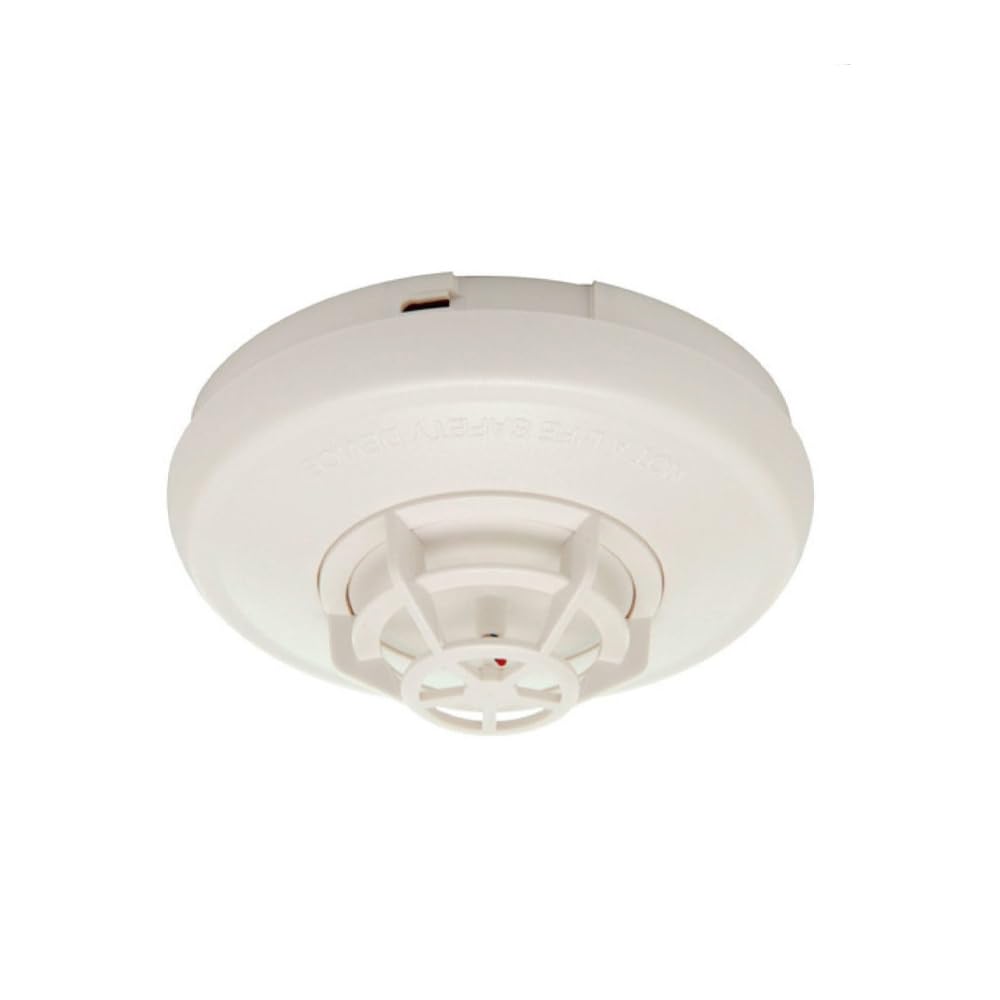
Type: Addressable analog heat sensor
Sensor: TrueAlarm analog sensing
Temperature settings: Selectable 135/155/190°F
System: IDNet addressable
Colour: White
Intended use: Managed commercial fire systems
Simplex 4098-9734 TrueAlarm Heat Sensor
This is a commercial device, not a household alarm, and it belongs in the roundup only for buyers running a managed system that already speaks the same language. The selectable temperature points let an installer tune the sensor to the expected ambient heat of a plant room or drying area, and addressable operation means the panel reports the exact device rather than a general zone. The white housing suits visible ceiling mounting in a working building.
It suits facilities managers and installers specifying into an existing panel, and nobody else. The trade-off is decisive: it is a component rather than a standalone alarm, so it does nothing useful without a compatible control panel and commissioning.
Trade-off: Without a matching addressable panel and commissioning, this sensor cannot raise an alarm at all.
Kidde Heat Detector, Hardwired with Battery Backup

Type: Hardwired heat detector with battery backup
Power source: Mains with battery backup
Indicators: Two LEDs
Interconnect: Interconnect capability
Intended use: Garages and similar spaces
Brand: Kidde
Kidde Heat Detector, Hardwired with Battery Backup
Kidde positions this unit for garages, and a dryer cupboard shares the same characteristics: dusty, sometimes cold, and a poor home for a smoke alarm. The two LEDs give a visible status check without climbing to press a test button, and interconnect capability means it can link to other compatible alarms so a trigger in the cupboard sounds throughout the house. The hardwired body with battery backup matches the household standard.
It is the strongest choice for a buyer who wants the cupboard alarm tied into the rest of the home’s protection rather than sounding alone. The trade-off is that interconnect only pays off if the other alarms on the circuit are compatible, so a mixed set of brands may leave it isolated.
Trade-off: Interconnect capability is only useful when the other alarms on the circuit are compatible with it.
System Sensor 5604 Fixed Temperature Heat Detector

Type: Fixed temperature heat detector
Trigger temperature: 194°F
Circuit: Single circuit
Brand: System Sensor
Model: 5604
Intended use: High-temperature environments and system testing
System Sensor 5604 Fixed Temperature Heat Detector
A fixed-temperature detector triggers at one set point rather than judging rate of rise, and 194°F is a high one. That makes it a specialist part: it is chosen where normal operating temperatures are already warm and a lower threshold would cause nuisance alarms, and it is also used in alarm testing work. The single-circuit design is simple and predictable, with no addressable electronics to configure.
It suits installers and maintenance engineers working on a system that already specifies this trigger point. For a domestic dryer cupboard the trade-off is real: a high fixed threshold means a slow, smouldering fire may build for longer before the device responds, so it is not the first choice for a family home.
Trade-off: The high fixed trigger point delays response to slow, low-heat fires compared with a rate-of-rise heat alarm.
Before You Buy
- Power source: A cupboard with a dryer usually has mains wiring nearby, but confirm a permanent feed exists before choosing a hardwired unit; battery-only heat alarms are an option where it does not.
- Sensor type: Rate-of-rise and thermistor alarms suit a domestic cupboard; fixed-temperature detectors with high trigger points are for warm plant areas and system work.
- Compatibility: Match the alarm to the existing mounting base, wiring voltage and, where interconnect is wanted, the other alarms in the home.
- Coverage: Check the stated detection range against the cupboard’s size — a large walk-in cupboard needs more than a small airing cupboard.
- Sound level: An alarm inside a closed cupboard is muffled, so a loud sounder or interconnect to alarms elsewhere in the house matters.
- Certification and standard: Confirm the unit is intended for the location it will serve; commercial system components are not substitutes for household alarms.
- Installation: Hardwired units need an electrician in most homes; budget for that labour alongside the purchase price.
Frequently Asked Questions
-
Why use a heat alarm instead of a smoke alarm in a dryer cupboard?
Dryers produce lint and damp air that cause nuisance triggers in smoke alarms. Heat alarms ignore both and respond to the temperature rise a real fire creates. -
Can a heat alarm go inside the cupboard itself?
It can, but the sound will be muffled by the door. Interconnect capability, so the whole house sounds, is the safer arrangement. -
Is a hardwired alarm necessary, or will a battery unit do?
Hardwired with battery backup is the more reliable pattern because it removes battery-only failure. Where no mains feed reaches the cupboard, a battery unit is still far better than nothing. -
What does 194°F fixed temperature mean?
The detector triggers when the air around it reaches that set point. It is a high threshold chosen for warm environments, not a typical domestic setting. -
Can an addressable sensor like the Simplex unit be used at home?
No. It needs a compatible addressable control panel and commissioning, which a household installation does not have. -
How often should the alarm be tested?
Follow the manufacturer’s guidance, and test after any electrical work in the cupboard. A quick press of the test button confirms the sounder still works.
Bottom Line
For most homes, the First Alert BRK HD6135FB is the pick: it is a household heat alarm with a 9V battery backup, it ignores the steam and lint a dryer throws out, and it does not depend on a commercial panel to work. Buyers wiring into an existing system should check compatibility first, and anyone specifying a managed building should go straight to the Simplex sensor. Check the current price on the First Alert BRK HD6135FB before ordering.
