Why there are Amazon links here: Brave Review is paid a commission for qualifying Amazon purchases made through the links below. Your price does not change, and using our links is entirely optional. How this works
Best Thermostat for a Flat with Electric Underfloor Heating
Electric underfloor heating is a natural fit for a flat: no boiler, no pipework, and a warm floor in a small footprint. The catch is control. A thermostat built for a whole house rarely suits a single heated zone, and a flat’s wiring, WiFi and daily routine all shape which controller makes sense. This shortlist covers five thermostats for electric underfloor systems, from a budget WiFi unit to a dedicated floor-sensing touchscreen. It suits renters upgrading a small heated zone, owners fitting a bathroom or kitchen floor, and anyone who wants app control without rewiring. The overview table below sorts them in under a minute.
The Picks at a Glance
| Product | Key Spec | Best Use | Price Tier |
|---|---|---|---|
| Programmable Thermostat for House Radiant Underfloor Heating | Dual sensing, built-in Class A GFCI, 3600W | Budget floor-sensing control | Budget |
| Mysa Smart Thermostat LITE | WiFi, 7-day scheduling, HomeKit/Alexa/Google | Smart control on a budget | Budget |
| OJ Microline UDG4 | Touchscreen, Class A GFCI, floor sensor included | Dedicated floor thermostat | Mid |
| SunTouch SunStat CommandPlus | WiFi touchscreen, floor sensor, GFCI | Premium smart floor heating | Premium |
| meross Matter Smart Thermostat | Matter, HomeKit/Alexa/Google/SmartThings | Cross-platform smart control | Budget |
1. Programmable Thermostat for House Radiant Underfloor Heating

Type: Programmable underfloor heating thermostat
Sensing: Dual (air and floor sensor)
Safety: Built-in Class A GFCI
Voltage: 120/240V
Power: 3600W
Adaption: Self-adaption voltage
This is a purpose-built floor thermostat rather than a repurposed room unit. The dual sensing is the headline feature: it reads both the air and the floor, so the flat’s floor warms to a set temperature instead of the controller guessing from room air alone. The built-in Class A GFCI adds ground-fault protection at the thermostat, which matters in a wet room like a bathroom. The 3600W rating and 120/240V compatibility let it drive a sizeable heated mat, and the self-adaption voltage handling eases installation across different supplies.
It earned its place as the budget floor-sensing pick. Buyers who want proper floor temperature control without smart features get the essentials here. The trade-off is the lack of app or voice control, so scheduling happens at the unit itself.
Trade-off: No WiFi or app control, so remote scheduling and voice commands are off the table.
2. Mysa Smart Thermostat LITE for Electric Baseboard Heaters
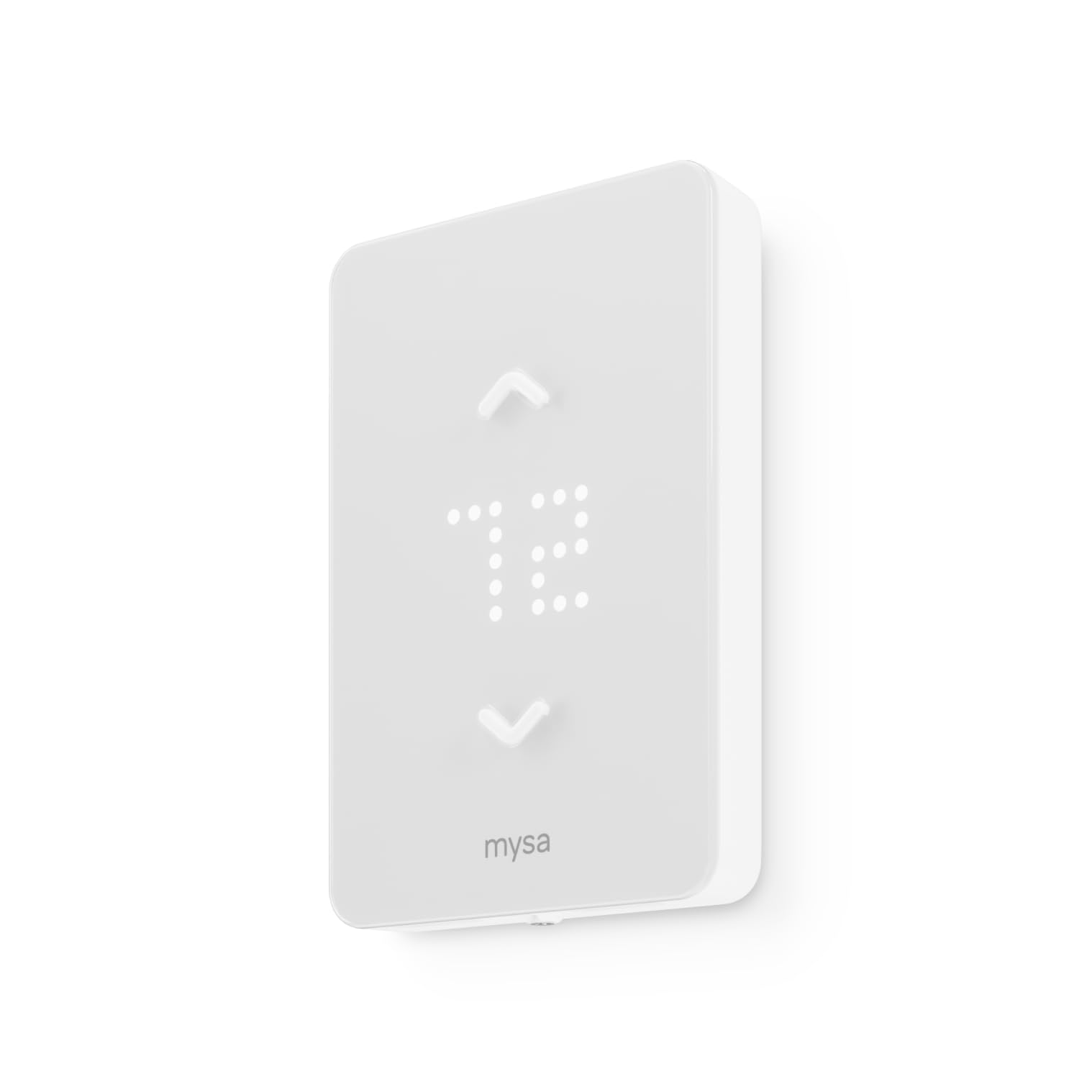
Type: WiFi programmable thermostat
Compatibility: HomeKit, Alexa, Google
Scheduling: 7-day
Voltage: 120V–240V
Claimed saving: Up to 26% on heating
Intended use: Electric baseboard heaters
The Mysa LITE is a smart controller aimed at electric resistance heating, and its 7-day scheduling and app control are the draw. It works with HomeKit, Alexa and Google, so a flat already tied to one ecosystem can fold heating into the same routines. The 120V–240V range covers common household supplies, and the LITE badge signals a trimmed feature set at a lower price than the full Mysa line. It is built for line-voltage electric heat, which is the same family as electric underfloor circuits.
It suits buyers who want app and voice control across a flat’s electric heating and are comfortable pairing devices. It is not the right pick for anyone who needs floor temperature sensing specifically, since its focus is baseboard-style electric heat rather than a floor probe.
Trade-off: Designed around electric baseboard heating, so floor-sensor control is not its strength.
3. OJ Microline UDG4 Touchscreen Programmable Heated Floor Thermostat

Type: Programmable heated floor thermostat
Interface: Touchscreen
Sensing: Dual
Safety: Class A GFCI
Voltage: 120/240V
Included: Floor sensor
Warranty: 3-year, USA product support
The UDG4 is a dedicated floor-heating controller with a touchscreen interface and dual sensing. The floor sensor comes in the box, which removes a common extra purchase, and the Class A GFCI is built in for wet-area safety. The 120/240V rating covers standard supplies, and the three-year warranty with US support is a meaningful reassurance for a fixed installation. The touchscreen keeps programming straightforward without needing a phone.
It earned its place for buyers who want a proven floor-specific thermostat and value support over app gimmicks. It is not for anyone determined to control heating from a phone, since the interface is on the wall.
Trade-off: Control stays at the wall panel, so there is no app or remote access.
4. SunTouch SunStat CommandPlus Smart WiFi Touchscreen Floor Thermostat
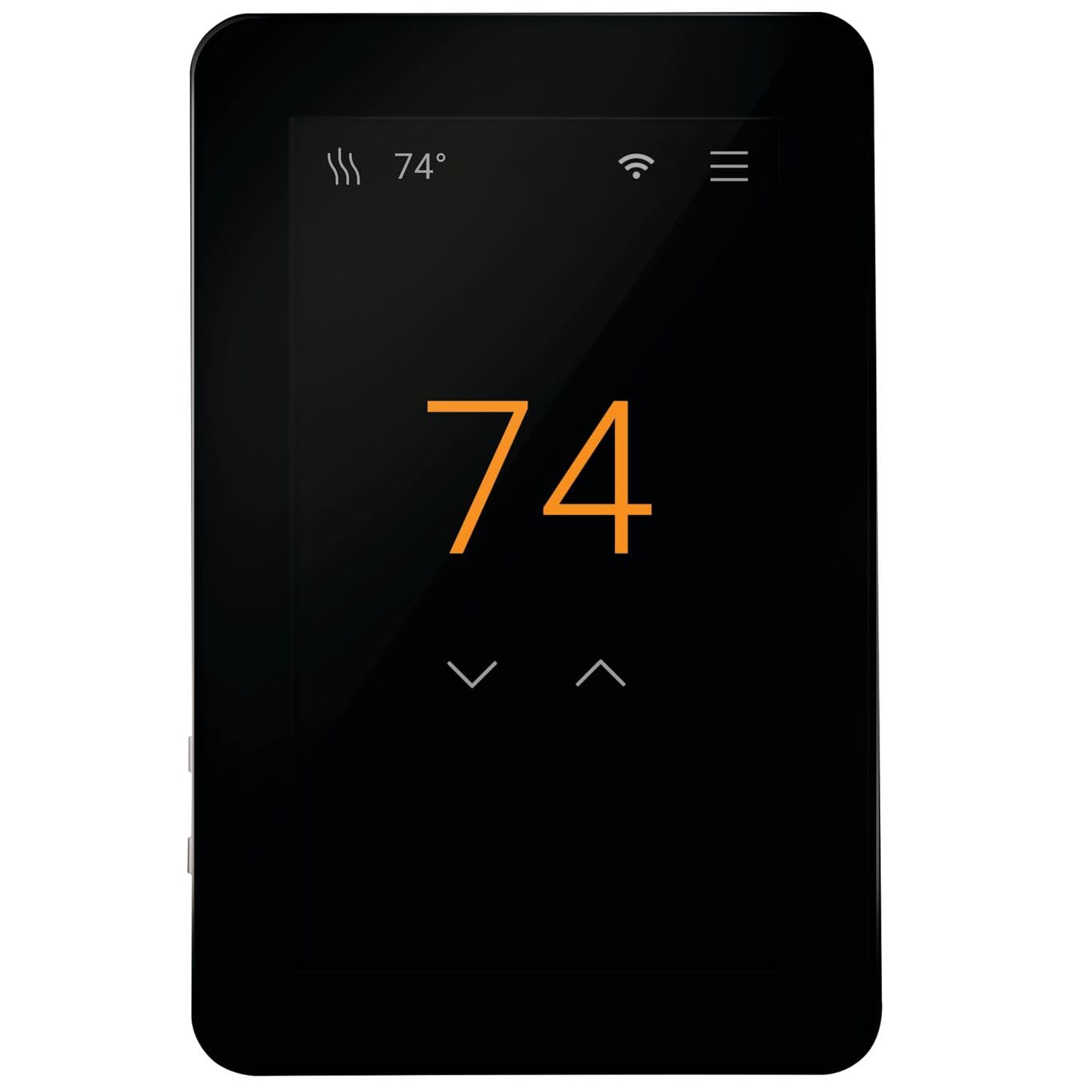
Type: Smart WiFi floor thermostat
Interface: Touchscreen
Sensing: Floor temperature sensor
Safety: Built-in GFCI
Voltage: 120–240V
Intended use: Electric radiant floor heating
This SunStat CommandPlus combines floor sensing with WiFi and a touchscreen, which is the most complete package on the list. The floor temperature sensor keeps the heated surface at the target rather than chasing air temperature, and the built-in GFCI protects the circuit. WiFi adds app scheduling and remote checks, useful for a flat where the heating runs on a timer. It is built specifically for electric radiant floor systems, so the wiring expectations match a mat or cable install.
It suits buyers who want smart control and proper floor sensing in one unit and are willing to pay for the combination. It is overkill for a small bathroom mat where a simpler controller would do.
Trade-off: The premium price makes it hard to justify for a single small heated zone.
5. meross Matter Smart Thermostat for Electric Baseboard Heaters
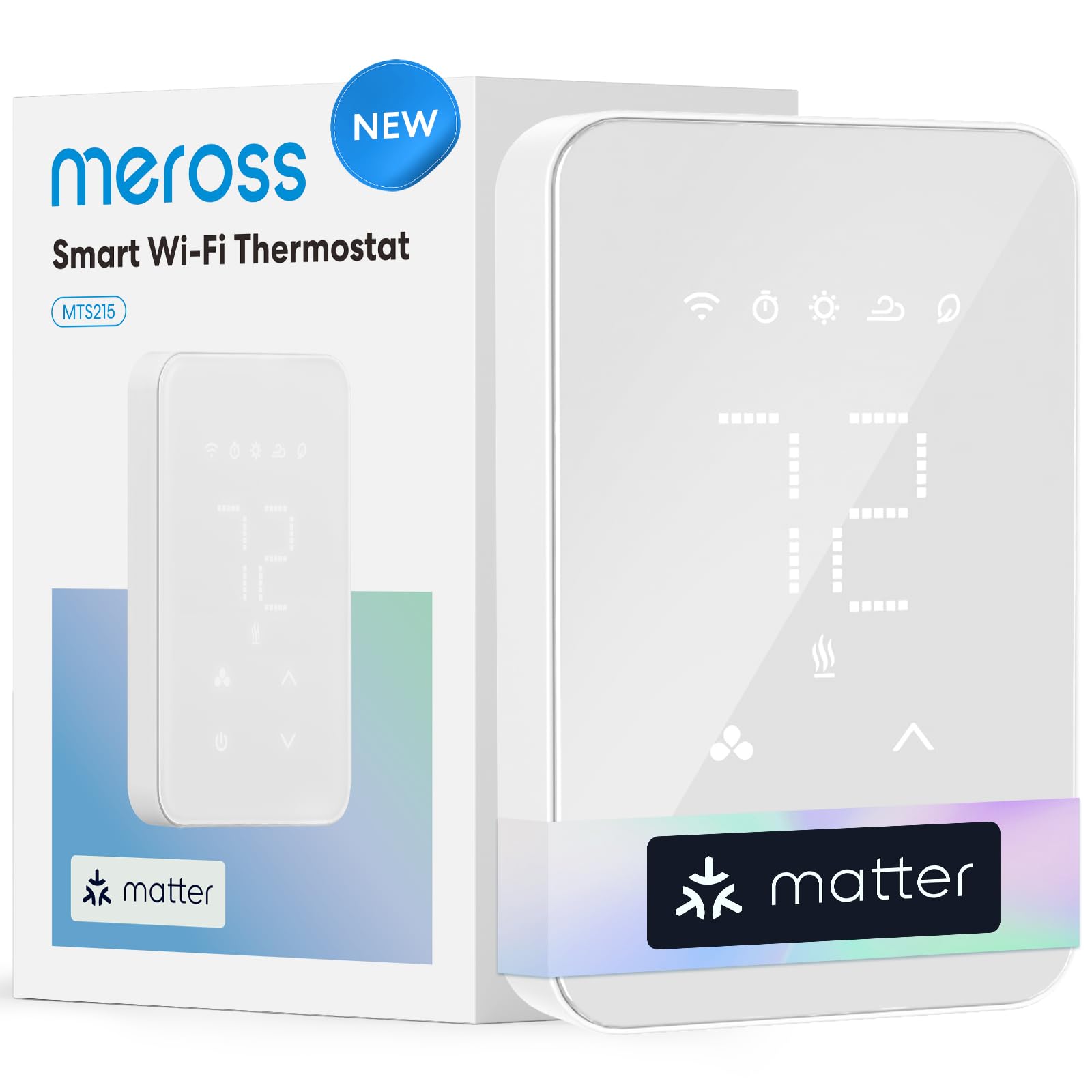
Type: WiFi programmable thermostat
Compatibility: HomeKit, Alexa, Google Home, SmartThings, Matter
Voltage: 120–240V
Features: Energy saving, remote control
Intended use: Electric baseboard heaters
The meross Matter thermostat is the budget route into broad smart-home compatibility. Matter support plus HomeKit, Alexa, Google Home and SmartThings means it slots into almost any flat’s ecosystem, and the 120–240V range covers standard line-voltage supplies. Remote control and energy-saving scheduling are handled through the app, and the price sits at the low end of the smart bracket. It is built for electric resistance heating such as baseboard units.
It earned its place for buyers who want cheap app control and cross-platform support. It is not for anyone who needs a dedicated floor probe, since it targets baseboard-style electric heat.
Trade-off: No floor sensor input, so it cannot regulate the heated surface temperature directly.
Before You Buy
- Sensing: A floor-sensing thermostat regulates the heated surface; an air-only unit regulates the room. For underfloor heating in a flat, floor sensing usually gives the more comfortable result.
- Compatibility: Check the thermostat is rated for the mat or cable’s voltage and wattage, and that the circuit suits a line-voltage controller.
- Safety: A built-in Class A GFCI is worth having in bathrooms and other wet areas.
- Smart platform: Match the thermostat to the flat’s ecosystem (HomeKit, Alexa, Google, SmartThings, Matter) before buying, not after.
- Sensor included: Some units ship with a floor sensor and some do not, so confirm before ordering to avoid a second purchase.
- Installation: Line-voltage thermostats need a suitably qualified installer; budget for fitting alongside the unit.
Frequently Asked Questions
- Can any smart thermostat run electric underfloor heating? No. The unit must be rated for line-voltage electric heating and, for best results, accept a floor sensor. Baseboard-focused models may work electrically but will not sense floor temperature.
- Is floor sensing better than air sensing for a flat? For underfloor heating, floor sensing usually gives more consistent comfort because it targets the heated surface rather than waiting for room air to change.
- Do these thermostats need a separate GFCI? Several picks here have a Class A GFCI built in, which protects the heating circuit at the thermostat. Confirm the chosen unit’s rating against local requirements.
- Can a renter fit one of these? A line-voltage thermostat swap needs an electrician and, in a rental, landlord permission. It is a fixed installation rather than a plug-in upgrade.
- Why do prices vary so much between picks? Budget units focus on core control, while premium models add WiFi, touchscreens and floor sensing together. The right tier depends on whether app control and floor sensing are must-haves.
Bottom Line
For a flat with electric underfloor heating, the Programmable Thermostat for House Radiant Underfloor Heating is the best value: dual sensing, built-in Class A GFCI and a 3600W rating cover the essentials without paying for smart features. Buyers who want app control should step up to the SunTouch SunStat CommandPlus, which pairs floor sensing with WiFi.
