Why there are Amazon links here: Brave Review is paid a commission for qualifying Amazon purchases made through the links below. Your price does not change, and using our links is entirely optional. How this works
Best Smart Home Starter Bundle for a First Setup
A first smart home purchase goes wrong when the bundle solves the wrong problem. Lighting kits, security systems, and sensor kits each anchor a different routine, and the best smart home starter bundle is the one that matches the habit a household already has. The five picks below cover three buyer profiles: renters who want app-controlled lights, homeowners who want monitored security, and anyone building room-by-room automation on a budget. The overview table puts the differences side by side; the reviews explain who each kit fits and where it falls short.
Overview of the Picks
| Product | Key Spec | Best Use | Price Tier |
|---|---|---|---|
| Smart Home Starter Kit (Echo Hub, Smart Plug, 4 Bulbs) | Echo Hub display + plug + 4 bulbs | Voice-first control center | Mid |
| Ring Alarm 14-Piece Kit | 14-piece wireless security system | Whole-home monitored security | Upper |
| Ring Alarm 5-Piece Kit | 5-piece wireless security system | Starter security for a smaller home | Mid |
| Philips Hue Essential Starter Kit | Bridge + 4 E26 color bulbs | App and voice lighting control | Budget |
| Tapo Door Sensor Starter Kit | 3 contact sensors + hub with chime | Doors, windows, and entry alerts | Budget |
1. Smart Home Starter Kit | Includes Echo Hub, Amazon Smart Plug and 4 Amazon Basics Smart Bulbs, Designed for Alexa+

Type: Voice-controlled starter bundle
Includes: Echo Hub, Amazon Smart Plug, 4 Amazon Basics smart bulbs
Control: Alexa voice and the Echo Hub display
Best For: Households standardizing on Alexa
This kit is built around the Echo Hub, a wall-mountable touchscreen that turns scattered devices into one control panel, paired with a plug and four smart bulbs to give that panel something to control on day one. The Alexa ecosystem ties the pieces together: voice commands, routines, and a single dashboard for lights and appliances. It is the bundle for a household that has decided Alexa is the interface and wants the hardware to match. Setup leans on the Alexa app, and the plug and bulbs use standard fittings, so no wiring work is needed.
The appeal is coherence. A buyer who already talks to an Echo speaker gets a display that shows what it used to only say, plus bulbs and a plug that respond to the same routines. The bundle also sidesteps the usual first-week problem of buying a hub with nothing to connect to it. The caution is ecosystem lock-in: the Hub is most useful as an Alexa anchor, so a household split between voice assistants will find it less flexible than a platform-neutral bridge.
Trade-off: The bundle is priced for the Alexa ecosystem, so its value drops sharply for anyone who later switches voice assistants.
Who it suits: Alexa-first homes that want a central control screen and are willing to commit to one ecosystem. It is not the right pick for households that want Apple Home or Google to control the same devices.
2. Ring Alarm 14-Piece Kit (newest model), Wireless smart home or business security system, expandable, easy setup, Mobile App Control, 24/7 Professional Monitoring, Alexa Compatible
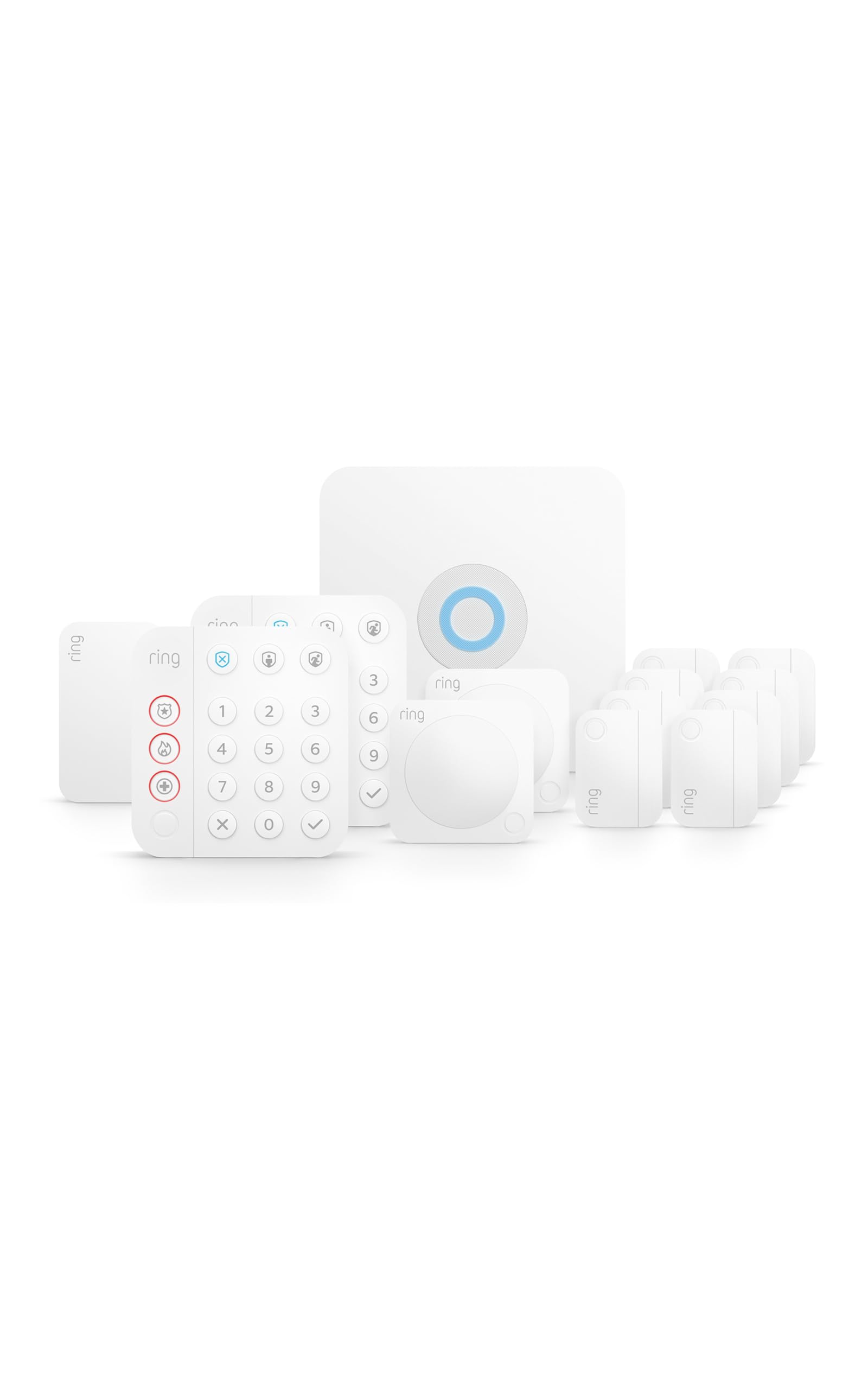
Type: Wireless security system kit
Pieces: 14
Setup: Wireless, self-install, expandable
Monitoring: 24/7 professional monitoring available
Control: Mobile app, Alexa compatible
Best For: Larger homes or small businesses
This is the largest kit in the lineup: fourteen wireless components covering the entry points and motion zones of a full house or a small business. Setup is wireless and self-installed, and the system expands with add-on sensors as coverage needs grow. The mobile app handles arming and alerts, and professional monitoring is available around the clock as an ongoing service. Alexa compatibility lets the system join voice routines rather than sit apart from them.
The 14-piece count is the point. A house with several doors, ground-floor windows, and a garage gets coverage in one purchase instead of three expansions. That makes it the pick for buyers who already know they want monitored security and would rather buy once. The drawback is commitment: professional monitoring is a subscription, and the kit itself is the most expensive pick here, so it only pays off for buyers who intend to use the monitoring service.
Trade-off: The full-size kit plus a monitoring plan is the costliest path in this roundup, and it is overkill for apartments or small condos.
Who it suits: Homeowners and small-business owners with multiple entry points who want monitored security. It is not for renters or apartment dwellers who need one door covered.
3. Ring Alarm 5-Piece Kit (newest model), Wireless smart home or business security system, expandable, easy setup, Mobile App Control, 24/7 Professional Monitoring, Alexa Compatible
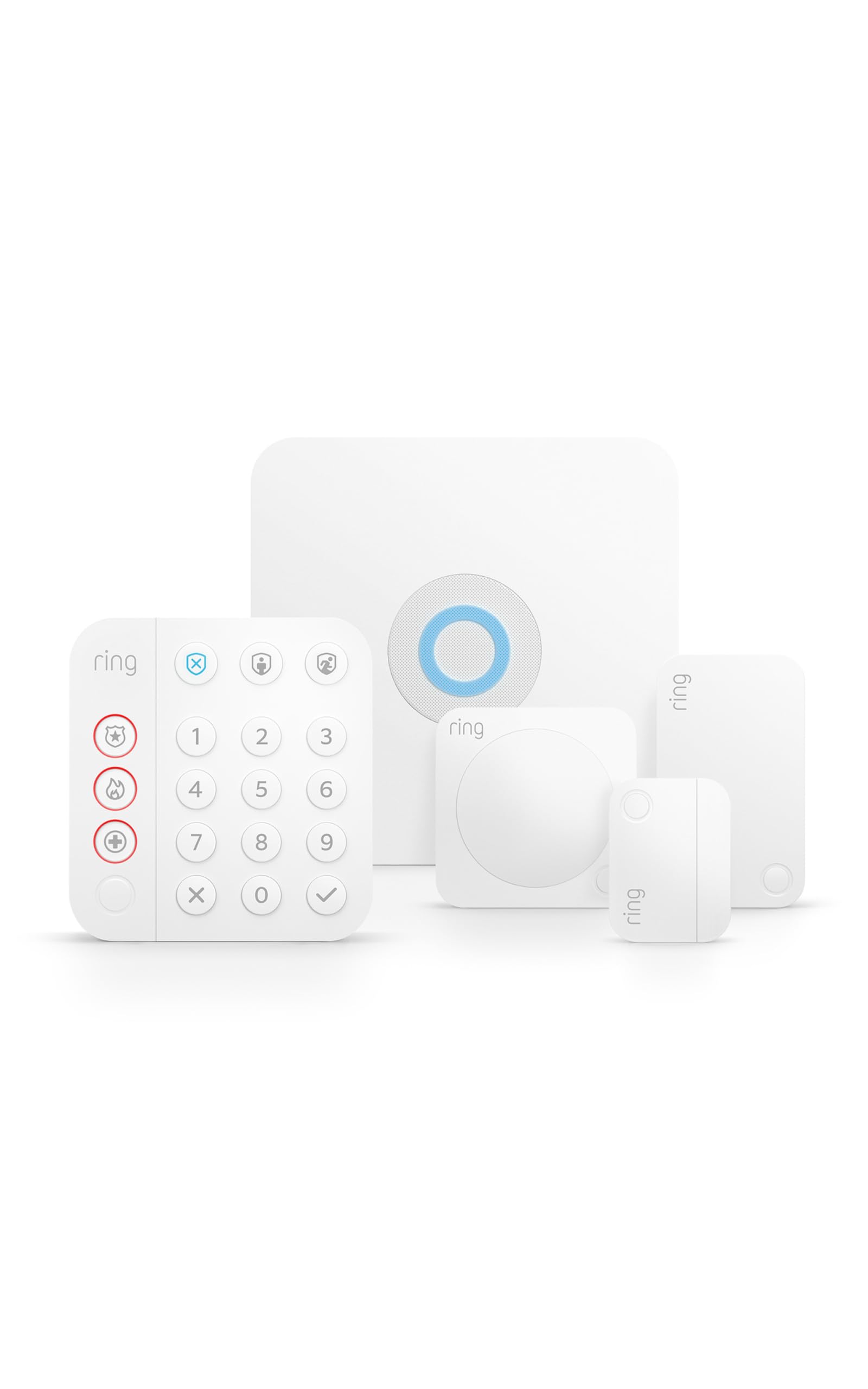
Type: Wireless security system kit
Pieces: 5
Setup: Wireless, self-install, expandable
Monitoring: 24/7 professional monitoring available
Control: Mobile app, Alexa compatible
Best For: Apartments and smaller homes
The five-piece version of the Ring Alarm covers the essentials: the core entry sensors and hub that make a monitored system work, with the same wireless setup, app control, and Alexa compatibility as its larger sibling. It is expandable, so a starter layout can grow one sensor at a time. For a smaller home or a first security purchase, it delivers the same platform without paying for hardware that would sit unused.
This is the sensible entry point for buyers who want professional monitoring but not a fourteen-piece commitment. A renter or apartment owner can cover the front door and a couple of windows and add components later if they move. The limitation is coverage out of the box: five pieces leave gaps in a house with several access points, and the monitoring service is still a recurring cost.
Trade-off: Five pieces cover a small floor plan, so a larger home will need add-on sensors soon after purchase.
Who it suits: Renters, apartment owners, and small households that want monitored security in stages. It is not for large homes needing immediate whole-house coverage.
4. White & Color Ambiance, 2200K-6500K, Dimmable, Works with Alexa, Google, Samsung SmartThings and Apple Home Philips Hue Essential Starter Kit, Bridge + 4 E26 Smart Bulbs
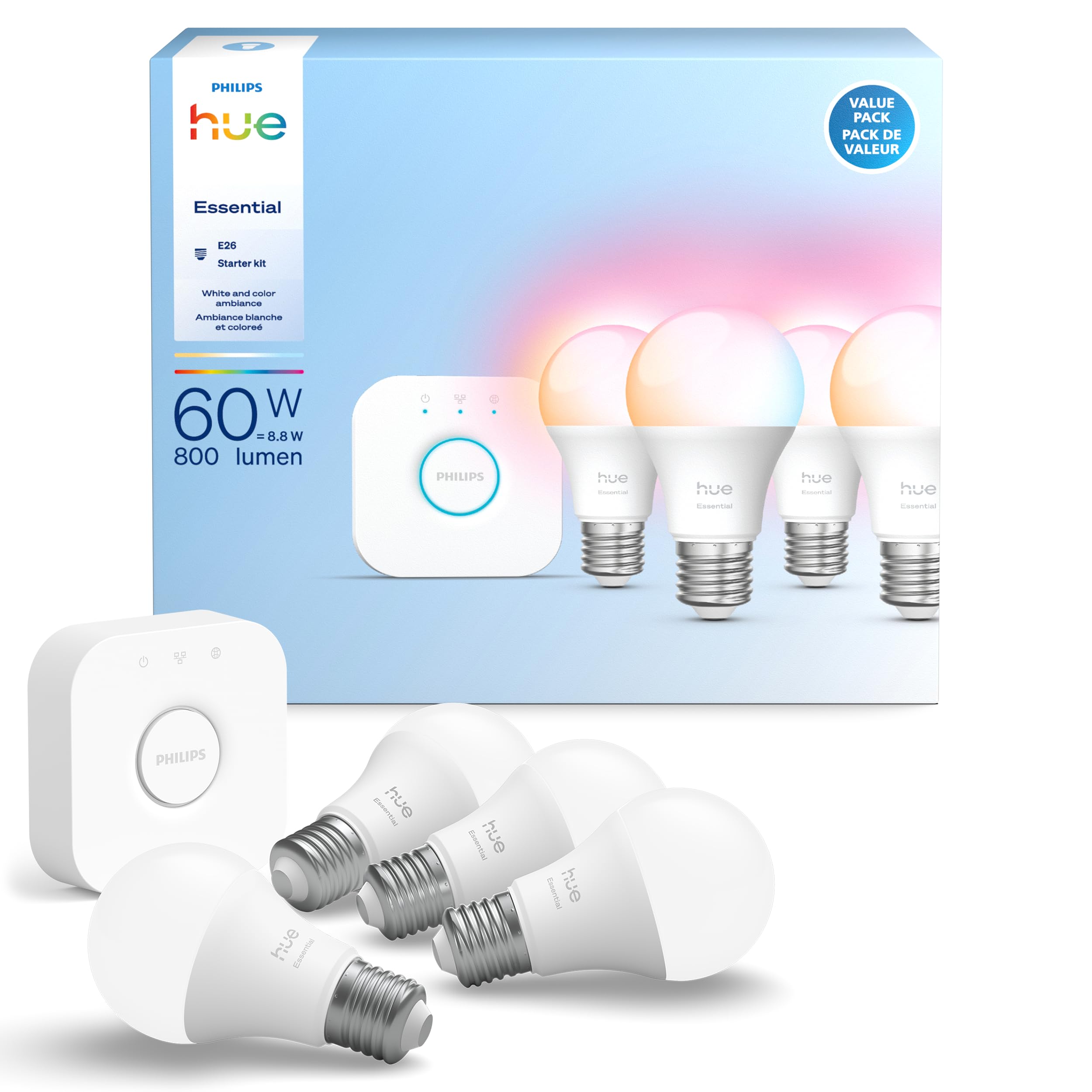
Type: Smart lighting starter kit
Includes: Hue Bridge + 4 E26 smart bulbs
Light: White and color ambiance, 2200K-6500K, dimmable
Compatibility: Alexa, Google, Samsung SmartThings, Apple Home
Best For: Platform-neutral lighting control
The Hue Essential kit pairs a Bridge with four E26 bulbs that shift from warm white to daylight and full color. The Bridge is the important part: it makes the bulbs work across Alexa, Google, SmartThings, and Apple Home at once, so the lights are not tied to one assistant. Dimming and color changes run through the app or voice, and the standard E26 base fits ordinary lamps and fixtures.
For a first smart home purchase, lighting is the lowest-risk entry: no subscription, no installation, and immediate visible results. The Bridge adds reliability that Bluetooth-only bulbs lack, and the multi-platform support makes the kit a safe choice for a mixed-device household. The caution is bulb count: four bulbs cover a room or two, and expanding a whole house means buying more bulbs, which adds up faster than the starter price suggests.
Trade-off: Four bulbs is a room-sized start, and whole-home lighting will require additional Hue bulbs at a meaningful per-bulb cost.
Who it suits: Renters and first-time smart home buyers who want app and voice lighting without committing to one assistant. It is not for buyers who need many rooms lit on a tight budget.
5. Tapo Door Sensor Starter KIT, Matter Compatible, 3X Smart Door Window Contact Sensor and 1x Smart Hub with Built-in Chime, Smart Automation, Real-Time Notification, T31 KIT

Type: Door and window sensor kit
Includes: 3 contact sensors + hub with built-in chime
Protocol: Matter compatible
Features: Smart automation, real-time notifications
Best For: Entry alerts and basic automation
This kit covers three doors or windows with contact sensors plus a hub that doubles as a chime, so an opened door can trigger both a notification and an audible alert. Matter compatibility is the headline: the sensors can join a wider smart home fabric rather than staying inside one app. Real-time notifications and automation rules let the sensors trigger other devices, such as lights or plugs, when an entry opens.
It is the cheapest way into the roundup and the most focused. Buyers who want to know when a door opens — deliveries, a side gate, a teenager’s curfew — get exactly that without paying for a monitoring contract. The built-in chime means the hub earns its place even in a household that ignores phone alerts. The limitation is scope: these are sensors, not a security system, so there is no professional monitoring and no siren coverage of the kind the Ring kits provide.
Trade-off: The kit alerts and automates but does not replace a monitored alarm system, and three sensors cover only a few entry points.
Who it suits: Budget-conscious buyers and smart-home tinkerers who want entry alerts and automation triggers. It is not for anyone who needs monitored security or full-house coverage.
Before You Buy
- Ecosystem: Decide which voice assistant or app the household will actually use. Alexa-first buyers get the most from the Echo Hub bundle; mixed-device homes do better with the Hue Bridge.
- Coverage: Count doors, windows, and rooms before choosing a kit size. Five security pieces suit an apartment; a house with several entries needs the larger Ring kit or add-ons.
- Subscriptions: Professional monitoring is a recurring cost. Buyers who will not pay monthly should weigh sensor kits and lighting instead.
- Installation: All five kits are self-install and wireless, but the Echo Hub mounts to a wall and the Hue Bridge needs a spot near the router.
- Expansion: Check that a kit grows in the direction needed — Ring adds sensors, Hue adds bulbs, and the Tapo hub supports Matter devices.
- Budget beyond the box: Starter prices understate the total. Bulbs, sensors, and monitoring plans are where the real spend accumulates.
Frequently Asked Questions
-
What is the best smart home starter bundle for a renter?
The Philips Hue Essential Starter Kit is the easiest fit, since bulbs screw into existing fixtures and come out at move-out. The Tapo sensor kit is a close second for entry alerts without drilling or contracts. -
Do these bundles require a subscription?
Only the Ring kits pair with optional 24/7 professional monitoring, which is a paid service. The Echo Hub bundle, Hue kit, and Tapo kit work without a subscription. -
Which bundle works with Apple Home, Google, and Alexa?
The Hue kit lists all three plus SmartThings, and the Tapo kit is Matter compatible. The Echo Hub bundle is built around Alexa. -
Can a starter bundle be expanded later?
Yes. Ring systems add sensors, Hue adds bulbs to the Bridge, and the Tapo hub supports additional Matter devices and sensors. -
Is a security system or a lighting kit a better first purchase?
Lighting delivers immediate, low-risk results and suits renters. Security suits homeowners who want monitoring and are ready for a recurring service cost. -
How many sensors does a small home need?
A one-bedroom apartment typically needs coverage on the main door and a window or two, which the five-piece Ring kit or the three-sensor Tapo kit handles.
Bottom Line
For most households, the Smart Home Starter Kit with Echo Hub is the best smart home starter bundle because it delivers a control screen, a plug, and bulbs in one coherent Alexa setup. Buyers who want monitored security should step up to the Ring 5-Piece Kit, and renters who want lights first should start with the Hue Essential kit.
